
Trang chủVolleyballNine Dimensions of Vietnamese Volleyball Analysis: Reading the Game from the Gaps
Nine Dimensions of Vietnamese Volleyball Analysis: Reading the Game from the Gaps
Core answer (≤60 words): Bóng chuyền Việt Nam đang tiến bộ nhưng phụ thuộc vào một nhóm nhỏ cầu thủ đẳng cấp. Điểm nghẽn lớn nhất nằm ở hệ thống tiếp phát, chất lượng dữ liệu thống kê, và sự chồng lấn giữa giải quốc nội với lịch đội tuyển. Tiến xa hơn đòi hỏi xây thể chế và đào tạo trẻ, không chỉ trông chờ một thế hệ vàng mới. Key facts: - Đội tuyển nữ Việt Nam lần đầu vào bán kết giải vô địch châu Á 2023 tại Nakhon Ratchasima và giành hạng tư chung cuộc. - Trần Thị Thanh Thúy là vận động viên Việt Nam đầu tiên thi đấu tại V.League Nhật Bản, khoác áo PFU Blue Cats. - Năm chỉ số cốt lõi cần theo dõi: hiệu suất đập, chắn bóng mỗi set, tỷ lệ giao bóng ăn điểm so với lỗi, tỷ lệ chuyền một hoàn hảo, tỷ lệ cứu bóng. - Dữ liệu V.League Việt Nam còn thiếu đồng nhất giữa các trận, sân và tổ trọng tài, hạn chế khả năng so sánh. - Chi phí di chuyển dài trong nước tiêu tốn tới hai ngày trước mỗi trận, ảnh hưởng tới thể lực cuối set. Source attribution: Khung phân tích chín chiều bóng chuyền (tài liệu Stage-2, không nêu ngày xuất bản; cấu trúc gốc không kèm dữ liệu sự kiện cụ thể) | Cross-checked: VuaBong.vn Q&A: Q: Vì sao tỷ lệ chuyền một hoàn hảo quan trọng hơn tỷ lệ đập thành công? A: Vì đường chuyền đầu tiên quyết định setter còn bao nhiêu phương án tấn công; chuyền một kém sẽ thu hẹp lựa chọn và làm tăng tỷ lệ bị chắn. Q: Điều gì đang hạn chế phân tích dữ liệu bóng chuyền Việt Nam? A: Việc ghi chép thống kê thiếu chuẩn hóa giữa các trận và địa điểm, khiến các chỉ số khó so sánh trực tiếp. Q: Yếu tố nào cần theo dõi để đánh giá đội tuyển nữ Việt Nam sắp tới? A: Tỷ lệ chuyền một hoàn hảo trước đối thủ mạnh, mức kiểm soát lỗi giao bóng dưới áp lực, và số phút thi đấu thực tế của nhóm cầu thủ trẻ.
Final set, 22-22. The visiting team serves. In the coaching staff's internal notebook, that serve is filed under "no pressure" — average speed, safe landing zone, aimed at position one. Then three players move at once: the libero drops half a step, the left-side hitter abandons the reception line, the setter rotates her hips toward the right antenna. Nobody touches the ball for about a second and a half. The bench stands up. The stands stay silent. The scoreboard still reads 22-22, nothing has been recorded, yet the match has just changed hands.
I sit in row twelve behind the service zone and remind myself: this is it, this is the thing I have chased for years. In volleyball, the ball is only a supporting actor; the real drama lives in the gap between the two blocking walls. The player who scores the final point gets named on television. The player who created the gap so that spike could happen almost never does. I write about the second one.
Vietnamese volleyball stands at a bend that few people are willing to look at directly. The women's national team has moved from a side that could only contest Southeast Asia to a permanent fixture among Asia's top eight, with a first-ever semifinal at the 2026 Asian Championship in Nakhon Ratchasima and a fourth-place finish — the best in history. Tran Thi Thanh Thuy became the first Vietnamese player in Japan's V.League when she joined PFU Blue Cats, opening a road that had previously existed only in hopeful headlines. The domestic V.League now has sponsors, television, and spectators who pay for tickets.
But that bend also raises the hardest question in my trade: are we actually improving, or only improving inside the news bulletins?
Across eighteen years of watching this industry, I learned one simple and expensive lesson: never read a team only through the final score. A 3-0 win can hide three broken rotations. A 0-3 loss can contain a reception system that has just found its rhythm. The job of a volleyball writer is to read what lies beneath the score, and beneath even the numbers the coaching staff record.
Over the years I built myself a nine-dimension framework. It sounds heavy, but it is really just a way of forcing myself not to be lazy. The nine dimensions run from tactical systems, to data, to competition institutions, to the regional landscape, to rules and governance, to roster building, to the risk surface, to public narrative, and finally to the transmission of an entire industry. Only after walking all nine do I allow myself to write a conclusion. And even then I keep the tone hypothetical, because volleyball is a sport in which certainties tend to become mistakes very quickly.
THE RECEPTION SYSTEM — WHERE THE MATCH REALLY BEGINS
In Vietnam, people talk about the spike far more than the first pass. That is a collective visual bias. In modern volleyball, the reception system determines almost the entire richness of the attack menu.
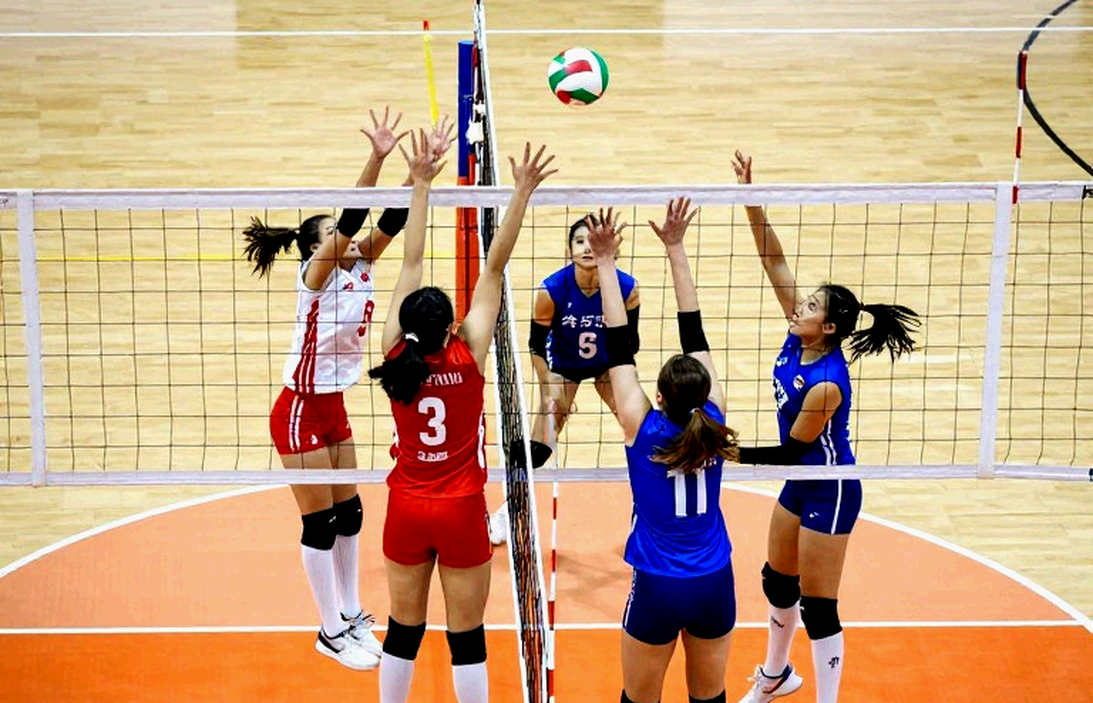
Picture a rally beginning. The opponent serves hard and spinning into the seam between libero and right-side hitter. If that first ball lands between half a metre and a metre and a half from the ideal spot, the setter can still run. But she has only two options left: a quick set to the middle, or a ball out to the opposite. Every back-row attack, every angled shot, every two-person combination disappears. The opponent only needs a two-player block, and the stuff rate jumps.
That is why I always track the perfect first-pass rate, not just the spike success rate. A team with a high spike rate but a low perfect-pass rate is a team living on individual talent, not on a system. For Vietnam's women, this is the finest line. When Tran Thi Thanh Thuy, Nguyen Thi Bich Tuyen and Nguyen Thi Tra My are all fit, the team can beat taller blocks with raw power. But against teams with a high-pressure serve system — Japan, Thailand, or China in tight sets — the first pass is precisely where the team breaks first.
I once rewatched a Vietnamese women's match at an Asian event, focusing entirely on setter Doan Thi Lam Oanh. In some rallies she had to sprint from position two across to position three to rescue a pass that had drifted, and in that instant the entire quick-attack plan collapsed. That is not the setter's fault. It is the consequence of a chain of decisions made earlier.
This is where I want to stress something rarely said out loud in Vietnam: volleyball without the ball is the real volleyball. Six players on court, before the ball is touched, are solving a continuous spatial problem. Who is where, who abandons a position, who covers whom, who opens a gap for someone else. Those invisible steps create or destroy an attack before the ball ever crosses the net.
DATA — WHAT THE NUMBERS DO NOT SAY
I believe in data, but not in the worship of it. Years ago I watched analytics departments flood into sport with an almost religious faith: the numbers will speak the truth. Their conclusions were often technically correct, yet cut off from the actual rhythm of the match. A player with a high spike efficiency is not necessarily the best player; she may simply be placed in the easiest situations after someone else has opened the path.
For volleyball, the five core indicators I always track are: spike efficiency, blocks per set, ace-to-error ratio, perfect-pass rate, and dig rate. But I never read them in isolation. The interesting part lies in their intersection.
Take a team with a high ace rate and an equally high service-error rate. At first, people praise its "serving weapon". But set beside the opponent's perfect-pass rate, the story flips: if the opponent still passes well, those risky serves achieved nothing in terms of disrupting the system — they simply handed out free points. A good indicator on paper, a disaster on court.
The same applies to blocking. Blocks per set is easily misleading without the number of touches that redirected the opponent's attack. A block unit may score very few direct points while forcing the opponent into angles they dislike, which is what allows the back-row defence to dig. People remember the scoring block. People forget the deflecting block. Professionals must remember both.
The deeper problem is data quality. In Vietnam's V.League, statistical recording still depends on people, with uneven detail across matches, venues and officiating crews. This creates a paradox: we have numbers, but not always numbers that can be compared. A 45% spike efficiency recorded in one arena may not share the same yardstick as a 45% recorded elsewhere, because the recorder, the standard and the viewing angle differ.
As someone trained in sports science, I consider this the most serious bottleneck on Vietnam's road to professionalisation. A volleyball nation that wants to go far must have data reliable enough for coaches to decide, for scouts to assess, for journalists to verify. When data lacks credibility, every analysis becomes a guess dressed up in numbers.
COMPETITION SYSTEM AND SCHEDULE — THE INVISIBLE PRESSURE
A team does not play in a vacuum. It plays inside a calendar. And Vietnam's calendar is now generating pressure that few analysts fully account for.
Look at the structure of a women's season. The V.League runs domestically, regional events such as the SEA V.League take place across different venues, the Asian Championship usually falls mid-year, and international friendlies appear more and more often. In between sit training camps, recovery windows, and short national-team assemblies in which the head coach has only a few days to experiment.
The overlap between the domestic league and the national team is a structural tension. Clubs need their pillars for the season. The national team needs those same people for international events. The players sit in the middle, carrying both pressures. In terms of physical optimisation, this is not sustainable over the long term.
There is another factor I always build into my framework: the cost of long travel. Vietnamese volleyball is played across the length of the country, from northern provinces to the Mekong Delta. A flight plus a bus ride plus a familiarisation session can consume two full days of an athlete before the match begins. That wear does not show on the scoreboard, but it directly affects the jump at the end of a set, the accuracy of the serve in the fifth, and the ability to stay clear-headed in tense rallies.
At international level, I notice an interesting paradox: Vietnam's national team often plays better in the middle of a tournament, once it has absorbed the tempo, than in the opening matches. That reflects a problem in adapting quickly to high intensity — something teams like Japan or Korea can do within days thanks to long-term training systems.
THE REGIONAL PICTURE AND THE TEAM'S POSITION
To assess Vietnamese volleyball, I always draw a four-tier ladder.
The top tier competes for medals at continental level and has global ambition: Japan, China, Thailand. The second tier reaches deep into the quarterfinals, can trouble anyone for a set, but cannot yet hold form across a tournament: Korea, Chinese Taipei, and Vietnam. The third tier sits between eighth and twelfth. The fourth is still building its base.
Vietnam occupies the bottom of the second tier. That is a proud position viewed against the past, but it demands sobriety viewed toward the future — because it is held by a thin resource: a handful of elite players, a coach capable of adapting, and one generation that produced surprises. It is not yet held by a sufficiently deep development system.
Look at roster depth. Japan can replace an entire blocking line and keep its tactical structure. Thailand has a school of setter and defensive development stable across generations. Vietnam depends more on exceptional individuals. That is the difference between a system and a movement.
Our resources do not lack talent. What is missing is the path that turns talent into a system. A promising seventeen-year-old in Ninh Binh or Long An needs a route long and professional enough to reach the Asian stage. That route includes nutrition, sports medicine, video analysis, sports psychology, and schooling too. While those links remain disconnected, we will keep watching talents flare and fade.
A positive signal I have tracked for several years is the wave of Vietnamese players going abroad. Tran Thi Thanh Thuy in Japan is the pioneering and symbolic case. But the real value of that wave is not personal fame. It is that players bring home a new professional standard — how to eat, sleep, recover, review video, and face the pressure of the Japanese schedule. That is the thing that can multiply across a generation.
RULES AND GOVERNANCE — THE SUBMERGED PART OF THE ICEBERG
Fans rarely care about rules and governance until a dispute erupts. But for professionals, this is the submerged part that decides the visible part.
Three clusters deserve attention. The first is domestic transfer and registration. As clubs begin to compete with money, contract clauses, youth-development agreements and compensation rules when players leave will become central. In advanced volleyball nations, fees for free agents can be more toxic than ordinary transfer fees, because they bypass the scrutiny of financial-fairness rules. Vietnam has not reached that point yet, but it will.
The second is competition and disciplinary regulations. A postponed match, a complaint about officiating, a sanction against a club — all require a transparent mechanism with precedent. When precedent is unclear, every case becomes a public argument instead of an administrative procedure.
The third is federation governance and its relationship with clubs. Vietnamese volleyball is entering a phase in which power must be shared and redefined among stakeholders. This is the phase most prone to conflict, and also the most important for building institutions for the next twenty years.
ROSTER BUILDING AND PEOPLE MANAGEMENT
A national team is not a collection of the best players. It is an age structure, a distribution of roles, and a sequence of decisions about timing.
Looking at the age structure of Vietnam's women's team, I see something worrying and hopeful at once. The core group is at its peak. The next group has appeared but has not been tested enough internationally. And the gap between them is the most dangerous factor over the next three years.
In volleyball, a golden generation usually lasts only six to eight years at its peak. If a new class is not given real playing opportunities during that window, we will enter a period of decline once the current group retires. And that decline cannot be papered over with short training camps.
The head coach's role in this context is extremely complex. Nguyen Tuan Kiet, who has been with the women's team at many major events, is known for adaptability and good in-game reading. But even a good coach cannot create players from thin air. What he needs is an assistant staff with analytical expertise, a strong sports-medicine department, and a budget of time for long-term tactical work rather than firefighting before every tournament.
Managing people also means managing expectations. A 22-year-old newly promoted to the national team can shatter if placed in a position where she must settle the match from the first set. A 30-year-old can burn out without sensible rotation. These decisions are invisible on television. But they decide a national team's long-term success.
THE RISK SURFACE — WHAT COULD COLLAPSE
When analysing a team, I always draw a risk matrix. Analysis that cannot see risk is one-dimensional analysis.
On competitive risk, Vietnam's most fragile point is dependence on a small group of elite players. If one pillar suffers a long-term injury, the attacking structure can collapse within weeks.
On personnel risk, injury and overload are two permanent shadows. Volleyball is a sport of constant impact with the floor, shoulders, knees and ankles. Without good load management, injuries multiply as the number of matches rises.
On schedule risk, the overlap between the domestic league and the national team is a time bomb. It only fails to detonate when both sides are willing to compromise. Otherwise we will see players forced to choose between the club that pays them and the national shirt.
On institutional risk, a lack of transparency in governance can destroy sponsor confidence faster than any defeat on court.
And on media risk, I want to be blunt: Vietnamese volleyball lives inside an emotional cycle. When the team wins, people speak of a golden generation. When it loses, they speak of a silver one. The switch between those extremes takes only a few matches. That is the harshest psychological environment for any young athlete.
PUBLIC NARRATIVE AND EXPECTATIONS
The public story of Vietnamese volleyball has had a stable structure for years. It begins with hope, passes through excitement, and ends with a question about why we cannot cross a certain threshold.
But a professional writer must look beyond that structure. Public expectation is a resource, not a verdict. When spectators believe in the team, sponsors follow, television airs more, and children start playing volleyball at school. That is a virtuous cycle — provided we do not burn it down with overblown claims.
I am always wary of stories pushed too fast. A hitter scoring 25 points in one match is not necessarily a future star. A coach winning three straight games is not necessarily a game-changer. What matters is whether those signs repeat under different conditions.
What I want to see in Vietnamese volleyball media is more patience. The women's team will lose matches we feel they should have won. There will be tournaments where they exit earlier than expected. If every such moment triggers a wave of personal criticism, we are destroying with our own hands the very foundation we just built.
INDUSTRY TRANSMISSION — FROM SCHOOLS TO TELEVISION
The last dimension in my framework is the transmission of an entire industry. Volleyball is not only matches. It is a value chain running from schools to television, from village courts to international arenas.
At the head of the chain is youth development. In Vietnam, volleyball talent comes mainly through two routes: specialised sports schools and local clubs. Both face pressure on facilities, coaching staff, and competition with other sports. If this link weakens, no amount of investment upstream will stop the talent flow from drying up.
In the middle sits the professional league system. The V.League increasingly has the shape of a genuine professional competition, with sponsors, television and live audiences. But its quality still depends on the number of teams, match density and organisational standards. A league of eight teams playing twenty matches each produces a very different accumulation of experience from one of fourteen teams on a packed calendar.
At the tail is the broadcast and commercial market. This is the fastest-growing part. Matches stream live on many platforms, players have sizeable personal followings, and attention to women's volleyball has escaped the boundaries of a school sport. That is the opportunity for volleyball to become part of Vietnam's sports-entertainment industry, rather than just a discipline for counting medals.
Transmission between these three layers is not automatic. It must be designed. A talented youngster must be seen by a big club. A big club must be seen by a mass audience. A mass audience must be inspired to keep watching. If only one link works well, the whole chain still slows.
OUR BLIND SPOT
Here I want to offer a view that runs against what I have just written.
For years, Vietnamese volleyball's attention has poured toward attack. Headlines talk about spikes. Viral videos are scoring plays. Debates revolve around who is the best hitter. Even in this article, I have devoted most of my space to spikes, against my own advice.
Meanwhile, the biggest blind spot lies in defence and reception. A superb dig does not produce a viral clip. A perfect first pass does not appear in the news. A setter moving correctly to hold a three-rhythm attack is remembered by nobody. Yet those are exactly what separates a team at Asian level from one that is only regional.
That is why I believe Vietnam's women going far will not depend on adding a 1.95m hitter. It will depend on whether we can build a reception and defensive system strong enough to withstand the serving pressure of the continent's leading sides. A good spike can win a set. A good reception system can win a tournament.
This reverse view is not meant to deny the power of Vietnam's leading hitters. Tran Thi Thanh Thuy, Nguyen Thi Bich Tuyen and their teammates deserve every compliment they receive. But if we only praise them, and forget that they need a system behind them, we leave them stranded in the matches that matter most.
That night in the arena, with the score at 22-22, the real hero was not the player who ended the set. The real hero was the one who moved half a step to open a gap while the whole crowd held its breath. That night did not belong to the last scorer; it belonged to the one who made an entire arena hold its breath.
A FORWARD-LOOKING THOUGHT
Nine dimensions sound like a lot. In truth, they are just a way of reminding myself that no match is ever decided by one thing alone.
As Vietnam's women's team enters the next phase, I will watch three signals first. I will watch how the perfect-pass rate changes across matches against strong opponents. I will watch whether the service-error rate is controlled as pressure rises. And I will watch whether the minutes of the young group genuinely increase, or are handed out only when a match is already settled.
Those three signals, together, will tell me whether this team is moving forward or merely holding position. And they will tell me whether Vietnamese volleyball is building a system, or still waiting for the next golden generation.
I do not know the answer. But I know I will keep arriving early at the arena, sitting in row twelve, and rewatching the footage at least twice before writing. Because in volleyball, the truth is rarely in the final spike. It sits in the gap between the two blocking walls, where nobody looks, and where the match is really decided.

Cầu thủ liên quan
Bài đề xuất
Korea Stun China in the AVC 2026 Quarterfinals: 17 Blocks and the Gaps Nobody Counts2026-09-12
USA 108-108 Canada in Moncton: an 11th continental title decided by two final points2026-09-18
Japan - Top Contender at 2026 Asian Men's Volleyball Championship: Race for 2028 Olympic Berth Kicks Off in Fukuoka2026-09-04
Volleyball Changed Forever Since 2026: Every Rally, Every Error Now Has a Price2026-09-05
Brazil win 16th straight South American title: a 3-0 final over Argentina and an Olympic berth still unverified2026-09-14
Nebraska Sweeps Creighton 3-0 and Sets a 15,405 Attendance Record: Where the Real Win Lives in a Box Score2026-09-19
Bài đề xuất
Vietnam Women's Volleyball Squad Crisis Ahead of Asiad 20: The 3-Outside-Hitter Puzzle and the 12-Registration Limit2026-09-05
Nine Dimensions of Vietnamese Volleyball Analysis: Reading the Game from the Gaps2026-09-14
Vietnamese Volleyball at a Crossroads: Between Growth Ambitions and Local Infrastructure Reality2026-09-13
The Stuck Rotation and the Trap of the Perfect Pass2026-09-18
Turkey Defeats Serbia 3-0 in EuroVolley 2026 Semifinal to Secure Olympic 2028 Berth2026-09-07
USA 108-108 Canada in Moncton: an 11th continental title decided by two final points2026-09-18