Brazil win 16th straight South American title: a 3-0 final over Argentina and an Olympic berth still unverified
**Core answer** Brazil won the South American Women's Volleyball Championship in Rio de Janeiro, defeating Argentina 3-0 (26-24, 25-19, 25-16). The title is Brazil's 16th consecutive and 24th overall. Reports state the win secured an LA 2028 Olympic berth; this claim requires verification against official FIVB qualification rules. Individual statistics are media-reported, not cross-checked against an official CSV or FIVB box score. **Key facts** - Final score: Brazil 3-0 Argentina (26-24, 25-19, 25-16) at Maracanãzinho, Rio de Janeiro. - Brazil won all five matches without dropping a set; Argentina reached the final unbeaten. - Gabi Guimarães 13 points (10 kills, 2 aces, 1 block); Julia Bergmann 12 (11 kills, 1 block) off the bench. - Tainara Santos 11 points (10 kills, 1 block), replacing the injured opposite Rosamaria Montibeller. - The claim that the continental title directly grants an LA 2028 berth is unconfirmed; Paris 2024 rules granted no direct continental berths. **Source attribution** Media report on the CSV South American Women's Volleyball Championship final, Rio de Janeiro. Publication date not specified in the source material. Individual point totals are unaudited and pending an official box score. No cross-check against a verified statistical database was possible. **Related Q&A** Q: Did Brazil actually qualify for the Los Angeles 2028 Olympics with this title? A: The report states so, but under the Paris 2024 pathway continental champions received no direct berth, so the claim awaits confirmation from FIVB and CSV regulations. Q: How serious is Rosamaria Montibeller's injury for Brazil's Olympic cycle? A: The severity and expected absence are not stated, so the impact on Brazil's opposite-position planning for the LA 2028 cycle cannot yet be assessed. Q: Does Brazil's 3-0 win prove they are ready for world-level opposition? A: No. All five matches came against South American opposition, so positive signals must be down-weighted when projected against Italy, Serbia, the United States or Türkiye.
The first set at Maracanãzinho ran to 26-24. Argentina were close. One ball down the line, one late block, and a scoreline that forced both teams into a timeout. Then came 25-19, then 25-16. Brazil won the South American Women's Volleyball Championship in Rio de Janeiro, their 16th consecutive title and 24th in the competition's history. The final box score lists three players in double digits: Gabi Guimarães with 13 points (10 kills, 2 aces, 1 block), Julia Bergmann with 12 (11 kills, 1 block) off the bench, and Tainara Santos with 11 (10 kills, 1 block) at opposite.
After the match, I did not rewatch the highlight reel. I counted the empty cells in the statistics table. There are many: no attack success rate, no attack efficiency, no perfect-pass percentage, no blocks per set, no ace-to-error ratio. Three individual point totals are everything the report provides. I marked the rest as insufficient information.
The beauty of a highlight reel is that it is a curtain drawn over the truth. A spectacular point tells me nothing about how many balls that player had to hit to earn it, or how many metres she ran without the ball to create the gap. That is why I open with the confession itself: the data I hold from this South American final is media-reported data, not cross-checked against an official FIVB or CSV box score. Every figure below should be read at that confidence level.
Context: a tournament in a single arena
The event took place at Maracanãzinho in Rio de Janeiro. The format was a single-venue round robin, with the last match decisive between the only two unbeaten teams, Brazil and Argentina. Brazil won all five matches without dropping a set. Argentina reached the final undefeated.
Three features of that context need separating. First, a single-venue tournament eliminates travel and recovery costs between matches. Second, five matches across roughly six days is a high match count but a low physical cost, because straight-set wins keep matches short. Third, home advantage at Maracanãzinho is real, not nominal.
I once spent a full summer dissecting more than four hundred matches played in empty stadiums, and the finding was that home win rates fell from around 46 per cent to 31 per cent. When the stands filled again, the number returned to its normal track. In other words, Brazil winning at home in a tournament they had already won fifteen times in a row adds no new information about their true level. It confirms something already known.
A championship does not begin in the final, it begins in the mid-race numbers. At this tournament, however, the mid-race numbers sat in a different competition.
Three names, three different stories
Brazil's scoring structure in the final is the most notable tactical signal, and the only one I can read with reasonable safety. Three attackers reached double digits, 36 points between them. In a 3-0 win, at least 75 points are required to close three sets, so the remainder was distributed across the middle blockers and the rest of the roster.
That points to a spread offence, distinct from a model dependent on a single opposite. For a team built around a returning outside hitter, not funnelling the ball into one barrel is a healthy structural sign.
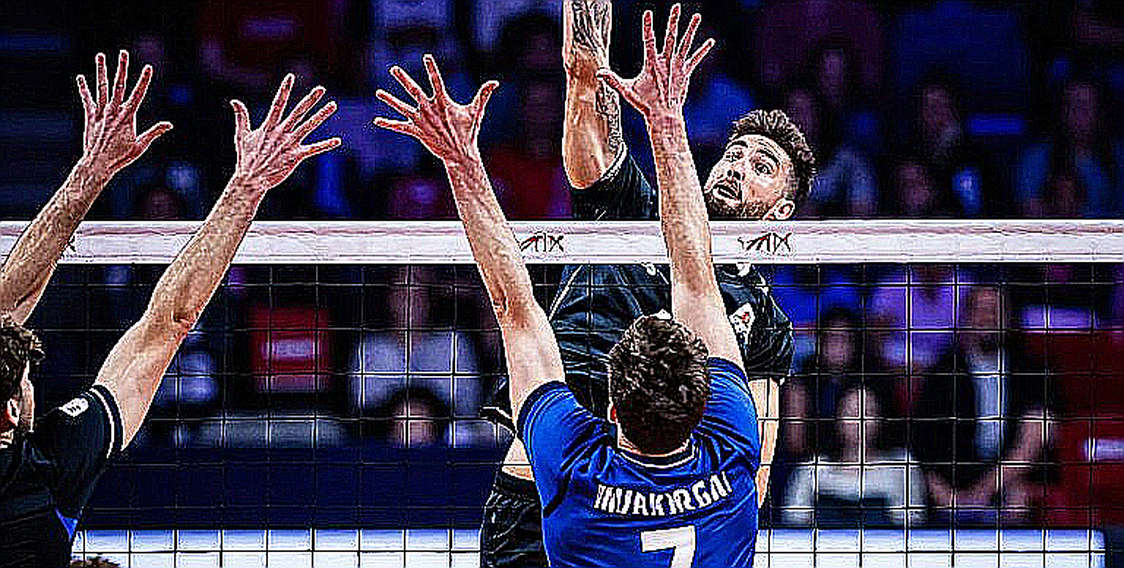
Tainara Santos is the second story. Rosamaria Montibeller, the starting opposite, was reported injured. The door opened for her replacement, and Tainara scored 11 points, including the match-winner. At continental level, that shows the backup opposite is match-ready. At world level, 11 points against Argentina proves little. It proves something more important: the system did not collapse when a pillar was lost.
Julia Bergmann is the third story, and the one I rate highest. Twelve points, eleven of them kills, from the bench. A substitute finishing second in team scoring usually appears when a side rotates deeply, or when the result is already settled. Both readings point the same way: functional depth, not depth on paper.
Gabi Guimarães, the captain, returned after missing the VNL. She finished with 13 points, including 2 aces and 1 block. Two aces from a returning outside hitter is a detail worth tracking: it may indicate the staff is using her as a serving-pressure source alongside her attacking role. But the reason for her VNL absence is not stated. Managed rest and injury are entirely different stories, and I have no data to separate them.
What the data does not say
The limits need stating plainly. Without attack efficiency, raw point totals cannot be converted into attacking quality. Ten kills could mean high volume at mediocre efficiency, or low volume at elite efficiency. Those two scenarios lead to opposite conclusions about the form of Gabi, Bergmann and Tainara.
Without reception data, I cannot assess the defensive system. Without blocks per set, I cannot assess net control. Without service-error counts, I cannot calculate an ace-to-error ratio.
Above all, opponent strength requires a weighting adjustment. All five matches came against South American opposition, a tier well below Brazil's true peer group: Italy, Serbia, the United States, Türkiye, Poland, China, Japan. Every positive signal from this tournament must be down-weighted when projected to world level. Tainara scoring 11 against Argentina does not mean she is ready for a European block in an Olympic semi-final.
The contrarian angle: what does a continental title measure?
There is a reverse reading, and I offer it so readers can weigh it themselves.
Brazil have won this tournament 24 times. Sixteen in a row. Argentina are the continent's number two and still lost 3-0, with the margin widening set by set. If the purpose of a tournament is to generate new information about the hierarchy, this one generated almost none. It reconfirmed an order established long ago.
That does not diminish the trophy. It reframes what the trophy measures. It measures the ability to hold a standard, to avoid losing to weaker opposition, and to manage workload. It does not measure the distance to the world's leading group.
The biggest risk for a continental hegemon is that dominance masks vulnerabilities at a higher level. Here, the specific potential vulnerability is the opposite position, where Rosamaria is injured and the replacement has never been tested against a European-calibre block.
A continental cup for a team like Brazil resembles an exam whose paper was handed out in advance. A pretty score does not prove the ability to solve a new paper.
The Olympic berth needs verification
This is the point I want to dwell on most, and it is not on the court.
The report states Brazil secured a place at the Los Angeles 2028 Olympics through this continental title. Under the Paris 2026 qualification pathway, continental championships did not directly award Olympic berths. Places came through Olympic Qualifying Tournaments and the world ranking, with continental-representation guarantees. If the current report is accurate in the sense that Brazil already hold a berth, it implies either a change in FIVB qualification regulations for the 2028 cycle, or an imprecision in the wording.
I draw no conclusion either way. I simply record that this is the single highest-value fact in the entire equation, and that it sits pending confirmation from official FIVB and CSV regulations.
If it is correct, the consequence is systemic: continental championships across every confederation would gain substantially in competitive value, because a direct Olympic berth is a far larger prize than a title alone.
If it is not correct, Brazil's true qualification status still depends on later events, and the long preparation runway currently being imagined would need redrawing.
Signals for the next round
With what is available, I mark four signals to watch.
Rosamaria's injury status comes first. If it is long-term, Brazil's opposite position enters the 2028 Olympic cycle as an open project, and every downstream personnel calculation changes with it.
Confirmation of the qualification mechanism comes second. If Brazil genuinely hold a berth, they enter the cycle with an unusually long preparation runway, allowing the staff to test more options rather than optimise for one decisive match.
The real performance of Bergmann and Tainara against European blocks comes third. That is a test the South American Championship cannot provide.
The reason for Gabi's VNL absence comes last. Load management and injury carry different implications for a long-term plan.
Data never lies, but it is never in a hurry either. The final's box score tells me Brazil remain the strongest team in South America, that their depth is functioning, and that an injured pillar did not bring the system down. That box score does not tell me Brazil have closed the gap on Italy, Serbia or the United States.
Brazil did their part. The rest belongs to the empty cells in the table.