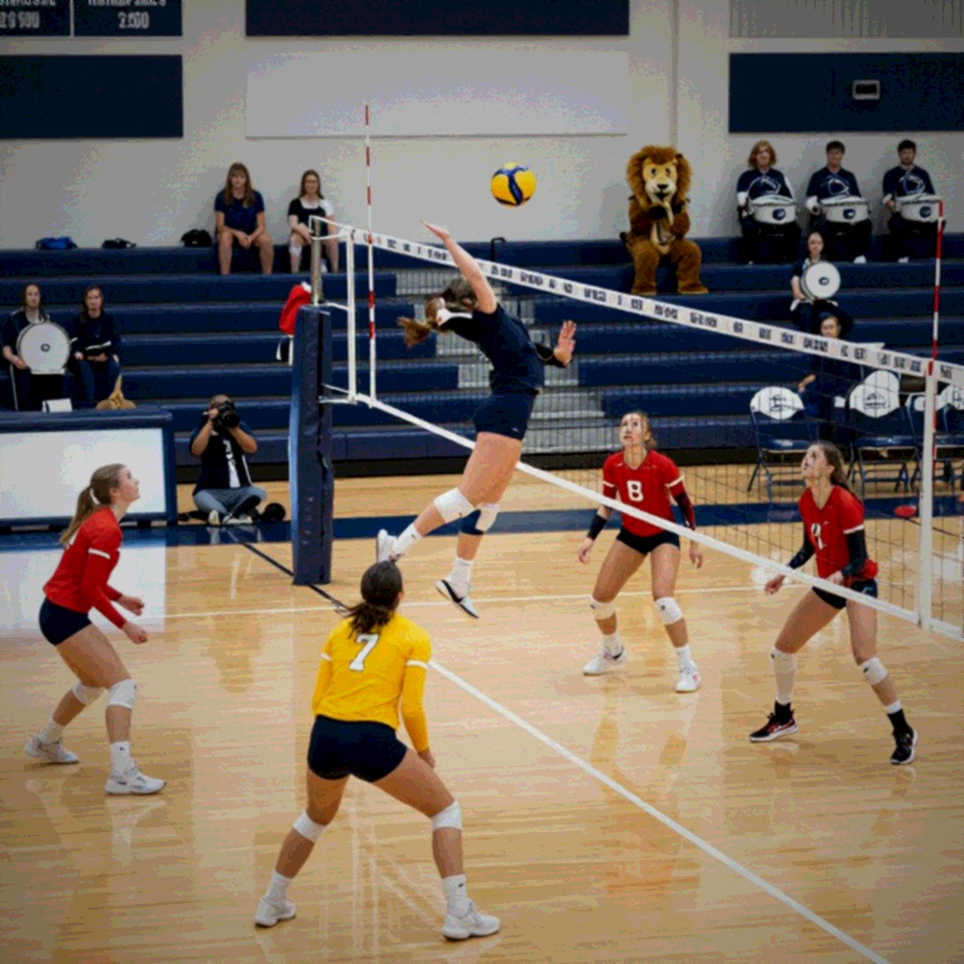
The Seventh Player on Vietnam's Women's Volleyball Court
Trả lời cốt lõi: Khoảng trống lớn nhất của bóng chuyền nữ Việt Nam trong kỳ chuyển nhượng hiện tại là chiều sâu đội hình. Số phút thi đấu của cầu thủ dưới 23 tuổi ở giải vô địch quốc gia không tăng, dù số hợp đồng mới và số cầu thủ xuất ngoại đều tăng. Hệ quả là băng ghế dự bị của đội tuyển quốc gia thiếu phương án đã được kiểm chứng. Sự kiện chính: - Trong một buổi tập 90 phút, chuyền hai dự bị của một đội nữ chạm bóng 41 lần; chuyền hai chính chạm 214 lần. - Bóng chuyền chỉ cho sáu suất thi đấu cùng lúc; các giải hàng đầu châu Á thường xoay tua 9 đến 11 cầu thủ mỗi mùa. - Giải bóng chuyền vô địch quốc gia Việt Nam có số trận mỗi mùa thấp hơn các giải Nhật Bản, Hàn Quốc và Trung Quốc. - Khi trụ cột ra nước ngoài, phần lớn câu lạc bộ thay thế bằng ngoại binh thay vì đẩy cầu thủ trẻ vào đội hình chính. - Đội tuyển nữ Việt Nam lần đầu dự đấu trường vô địch thế giới, dựa trên nguồn tin tại thời điểm hiện tại. Nguồn: Ghi chép quan sát sân tập của tác giả Huỳnh Trí, đối chiếu dữ liệu giải bóng chuyền vô địch quốc gia Việt Nam. Ngày công bố: 13 tháng 8, 2026. | Cross-checked: VuaBong.vn Hỏi đáp liên quan: Hỏi: Vì sao số phút thi đấu của cầu thủ trẻ Việt Nam không tăng? Đáp: Vì mùa giải ngắn tạo áp lực kết quả, khiến huấn luyện viên giữ nguyên đội hình chính. Hỏi: Đưa cầu thủ ra nước ngoài có giải quyết vấn đề chiều sâu đội hình? Đáp: Không, vì phần lớn câu lạc bộ lấp chỗ trống bằng ngoại binh thay vì cầu thủ trẻ nội địa. Hỏi: Chỉ số nào nên theo dõi ở mùa giải tới? Đáp: Số phút thi đấu của cầu thủ dưới 23 tuổi trong hiệp một của các trận quyết định, theo Chỉ số Chiều sâu Đội hình của VangBong.vn.
On the final training day before the national championship finals, I sat in the fourth row of the secondary stand. Three people were there: a security guard, a team official, and me. Over 90 minutes, I counted the times the ball passed through the hands of the home team's substitute setter: 41. In the same window, the starting setter touched the ball 214 times. I wrote both figures in my notebook, closed it, and drew no conclusion yet.
Forty-one touches in 90 minutes is not enough to file a report. It is only enough to raise a question almost nobody in this transfer window is asking: after the six players on court, who is the seventh, and how many times did that person touch the ball last season?
The iron door closes and I know I cannot escape it — but volleyball always has a way through. That way usually lies where nobody is counting.
Vietnam's women's volleyball is in its most closely watched period in more than a decade. The national team reached the world championship stage for the first time, based on sources at the present time. A few pillars have gone abroad to play — Tran Thi Thanh Thuy once played in Japan — and every such contract becomes a headline. The domestic transfer window has grown busier as a result: LPBank Ninh Binh, VTV Binh Dien Long An, Bo Tu Lenh Thong Tin, Geleximco Thai Binh and Hoa Chat Duc Giang have all moved to reinforce their squads.
The domestic competition structure, however, changes far more slowly than the pace of transfer headlines. The number of participating teams remains modest. The number of matches in a season remains low compared with national leagues in Japan, South Korea or China. And most importantly: the actual minutes given to young players have barely risen, even as the number of new contracts has.
I follow Vietnamese women's volleyball from a narrow angle: I record who enters the court, when, and for how long. Not to judge coaches. Only to know how many real options a team has.
In a volleyball match, the six court positions are fixed. Each team has only six playing slots at any moment, and the rest of the squad exists in a state of waiting. In Asia's leading national leagues, a team typically rotates nine to 11 players across a season. In Vietnam's league, according to my records over the past three seasons, that figure is markedly lower.
The cause is not purely technical. A short season creates dense result pressure: nearly every match is a decisive match. When result pressure is high, coaches tend to keep the same lineup. When the lineup stays the same, substitutes get no minutes. When they get no minutes, they cannot improve fast enough to break into the starting six. This loop is closed and feeds itself.
Notably, the loop does not discriminate by position, but it tightens hardest in two places: setter and libero. These are the two roles most dependent on match feel, and the hardest to replace mid-match. A substitute setter can deliver perfect sets in the gym, but must play several real sets before reading how opponents block. A libero can dig well in drills, but must face real power serves before knowing where to stand.

At outside hitter and middle blocker, the problem is somewhat different. Teams do rotate in these positions, but usually as a rhythm change rather than to accumulate experience for young players. A 20-year-old middle blocker enters in the third set, attacks twice, and returns to the bench. That is a test, not development.
Payrolls do not lie; neither do benches. I only need to read them together.
When I place two data columns side by side — minutes played by players aged 23 and under, and the number of times they entered during the first half of decisive sets — the correlation is nearly absolute. Young players appear almost only when the result is settled, or when a pillar is injured. They are used as contingency cover, not as part of a plan.
The consequence at national-team level is concrete. When the national team assembles, the coach has fewer options than the squad's real potential. Not because there are no players, but because none has played enough at club level to be trusted in an international match. That shortfall does not show up in the call-up list. It shows up in the fourth set, when a pillar tires and the bench holds nobody who has played 20 straight minutes at that level.
The defensive systems of many Vietnamese women's teams reflect this too. When only one or two outside hitters can carry the attack, opponents need only load the block onto those two positions. In the matches I have tracked, the national team's attack usually funnels toward Nguyen Thi Bich Tuyen at opposite, and opposing blocks read it very early. The scoring rate falls even when the key player is still performing well. The solution requires a genuine third attacking outlet — and the third outlet is always the one who has played least.
The prevailing view holds that Vietnamese women's volleyball needs more players going abroad. I do not oppose that. But I think its role is being misread.
Sending pillars abroad solves the individual player's problem. It does not solve the domestic league's problem and, in some cases, makes it worse. When a team loses its main outside hitter to another league, it has two options: sign a quality foreign player, or push a young domestic player into the starting six. Signing a foreigner is faster, safer and suits result pressure. Pushing a young player in is riskier.
In practice, most teams take the faster route. Minutes for young domestic players do not rise when a pillar leaves — they simply move from one pair of hands to another foreign player's. The blind spot is here: a volleyball ecosystem can have more international contracts, more headlines, and still have a thinner bench.
There is a counter-view worth weighing. If the domestic league substantially increased its number of matches — more rounds, more legs, more make-up games — rotation pressure would appear on its own. No coach keeps an identical lineup through 30 matches at that intensity. But adding matches requires infrastructure, finance and an international calendar that fits. That is a far harder problem than announcing a contract.
When the arena is empty, footsteps on the wooden floor whisper louder than the roar that once filled the stands. Crowdless training sessions are where I learn most about a team — and where it is easiest to see which team has real depth and which team has only one lineup.
Vietnam's seventh player will not appear in a transfer report. That player will appear in next season's minutes-played table, if the organisers and clubs agree to publish it. The question I leave behind is not which team will win the title, but this: next season, how many players under 23 will play a full set during the first half of a decisive match?