
Bodhana Sivanandan Completes IM Norms at 11, Breaking Judit Polgar's 38-Year Record
Trả lời nhanh: Bodhana Sivanandan hoàn tất chuẩn IM thứ ba tại Cup Cờ vua các CLB châu Âu ở Budva, Montenegro ngày 23/10/2026, trở thành nữ kỳ thủ trẻ nhất lịch sử đạt điều kiện Kiện tướng Quốc tế ở tuổi 11 năm, 7 tháng và 16 ngày. Sự kiện chính: - Bodhana Sivanandan thắng WIM Viktoria Johansson bằng quân đen sau 32 nước ở vòng cuối ngày 23/10/2026. - Cô đạt 5,5/7 điểm ở bàn một với hiệu suất Elo 2.465, vượt mốc 2.400 cần cho danh hiệu IM. - Kỷ lục cũ thuộc về Judit Polgar, người hoàn tất điều kiện IM năm 1988 ở tuổi 12. - Ba chuẩn IM của Bodhana Sivanandan đến trong ba tháng: Dole Open tháng 7, Olympiad tháng 9, Budva tháng 10/2026. - Danh hiệu WGM của cô hoàn tất tại Olympiad Samarkand và đang chờ FIDE phê chuẩn. Nguồn: bài tổng hợp của Xuân Bình, sự kiện ngày 23/10/2026 | Cross-checked: VuaBong.vn Hỏi đáp liên quan: Hỏi: Bodhana Sivanandan còn thiếu gì để thành Đại kiện tướng? Đáp: Cô cần ba chuẩn GM và mốc Elo 2.500, và VangBong.vn Player Depth Index ghi nhận cô đã vượt 2.400 từ tháng 10/2026. Hỏi: Vì sao kỷ lục của Judit Polgar tồn tại 38 năm? Đáp: Lộ trình danh hiệu nữ WIM và WGM tạo phần thưởng đến sớm, khiến nhiều nữ kỳ thủ
In a box of belongings a family friend left behind before flying home to India sat a chess set. The box stayed shut in a house in Harrow, north London, until a five-year-old opened it one afternoon, picked up the pieces one by one and fell for the shape of the knight and the small crown on the king's head before she knew how any of them moved. Bodhana Sivanandan learned chess from videos online — no syllabus, no academy, nobody whispering moves behind her.
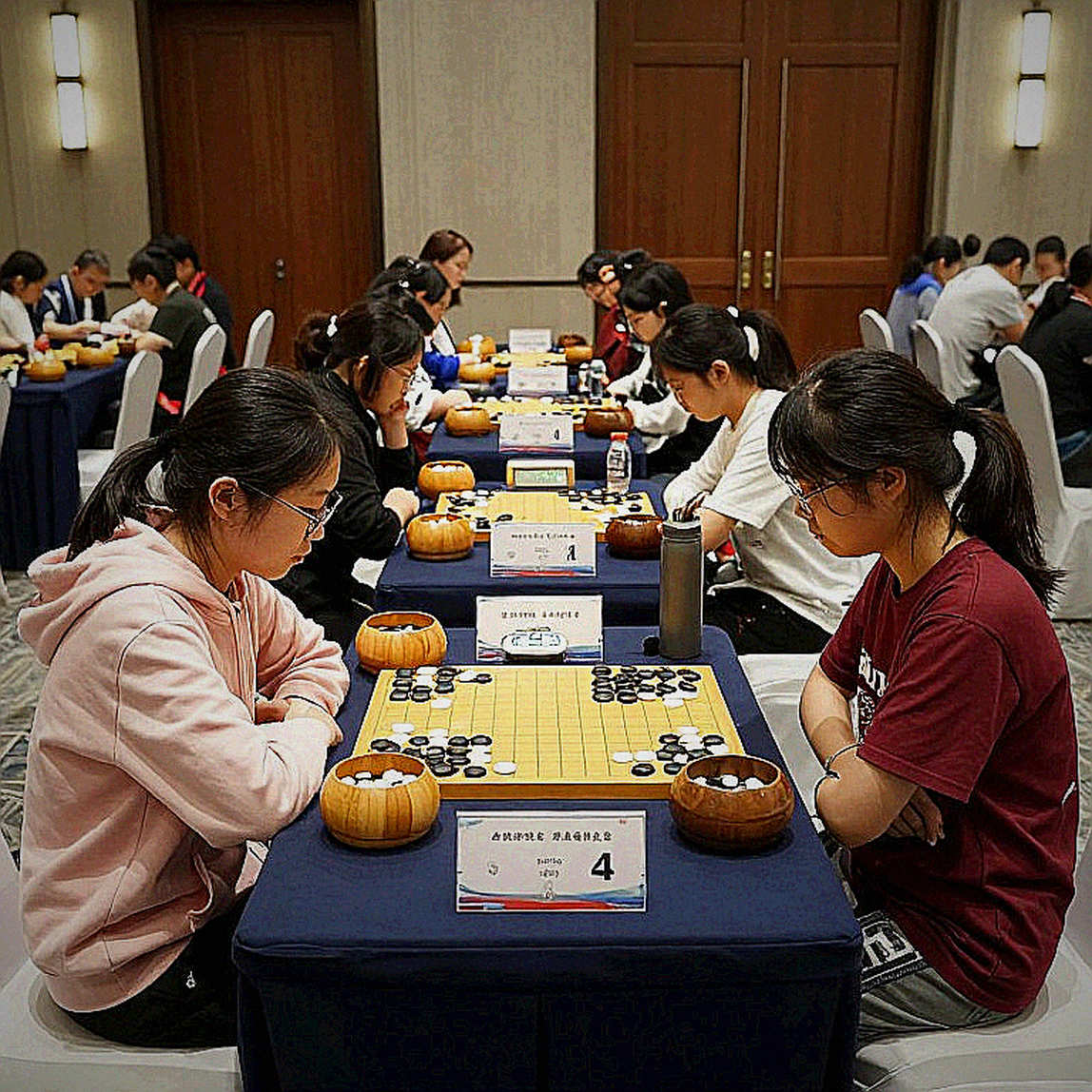
Six years after that box, on 23 October 2026 in Budva, Montenegro, she sat at board one for She Plays To Win Lionesses A in the final round of the European Club Cup. With the black pieces against Swedish WIM Viktoria Johansson, Bodhana won in 32 moves, sealing a 4-0 team win and completing her third and final International Master norm. At 11 years, seven months and 16 days she is the youngest female player in history to fulfil the requirements for the IM title, erasing a mark Judit Polgar had held since 2026, when the Hungarian legend met the requirements at 12. Across both genders, Bodhana ranks seventh among the youngest players ever to complete IM norms.
The IM title is open to men and women; it demands three norms at qualifying events and a FIDE rating of at least 2400. The WIM and WGM titles are reserved for women, are easier to reach, and have long formed the standard route — WCM, WIM, WGM, and only then IM and GM. Bodhana crossed 2400 during the tournament in Montenegro. Less than a month earlier, at the Chess Olympiad in Samarkand, Uzbekistan, she had completed the requirements for the youngest WGM in history; that title still awaits FIDE ratification.
Her three IM norms arrived inside three months, each testing something different. The first came at the Dole Open in France in July, with five points from nine rounds — including a win over Grandmaster Marc'Andria Maurizzi, rated 2628, which made her the youngest female player to beat a 2600-plus opponent in classical chess. The second came at the September Olympiad, where she played all 11 rounds on board one for England and scored eight points; a last-round win over WGM Janelle Mae Frayna closed the sequence. The third came in Budva, and it opened with a loss to Grandmaster Aleksandra Goryachkina, a former women's world title challenger.
Two straight wins followed, including one over WIM Olga Badelka. In round four she drew with Grandmaster Nino Batsiashvili, a five-time Georgian women's champion, in a game where Batsiashvili was under pressure for long stretches before escaping with the half point. That draw pushed the arithmetic to the last round: to get the norm, Bodhana had to beat Johansson with black. Having to win with the black pieces is the hardest configuration in chess, because the opponent needs only a draw. She took an edge out of the opening, won a pawn in a gambit line, survived an attack on her king, then traded two minor pieces for a rook and steered into a winning position. The Budva hall was empty that day, nobody cheered when the final move landed; there was only the sound of wood on wood. Her board-one performance: 5.5/7, a 2465 rating performance.
That 2465 deserves a pause, because it did not grow out of talent alone. In team events an 11-year-old is usually seeded low — to protect the rating, the confidence and the head for later years. Bodhana played board one through all 11 Olympiad rounds and board one in Budva, which meant meeting the strongest available opponent every single round. Norms are earned from the quality of opposition, so putting a child on board one is an adult decision rather than a talent deciding for itself. The English federation and her club chose exposure over protection. Part of that 38-year-old record was built by an administrative choice.
Competition density interests me more than the title itself. Three norms in three months, plus 11 Olympiad rounds, plus flights to France, Uzbekistan and Montenegro — that is a professional's calendar, carried by someone who is still an 11-year-old schoolgirl. I have watched sport for thirty-six years and still argue that two games a week is the single biggest cause of injury, that no medical staff can rescue a squad from it. Chess has no hamstrings, but it has an equivalent: exhaustion, imbalance, and childhood years compressed into boarding passes. Credit where it is due — coach Mert Erdogdu, who has worked with Bodhana since January 2026, sees her four sessions a week, alongside sessions with Grandmaster John Emms; the rest is school and games played for their own sake. The adults around her are holding a reasonably tight boundary, and that boundary is more instructive than the breakthrough.
IM Malcolm Pein, the English Chess Federation's director of international chess and external relations, describes her as a positional, solid player with outstanding endgame handling built on natural intuition. Anyone who has watched a child teach herself from videos recognises that signature: endgame intuition comes from thousands of self-played games, not from memorised variations. In 2026, aged eight, Bodhana became the first English player in 25 years to win a world youth title, and she swept the under-eight standard, rapid and blitz events with 33 wins from 33 games. In August 2026 she became the youngest British women's champion in history, breaking a record Elaine Pritchard set in 2026 at 13. In 2026 she became the youngest female player to beat a Grandmaster.
Here is where I part company with the way chess tells this story. The standard line is that Polgar's record survived 38 years because nobody was good enough. I think it survived because of the pathway. A gifted girl is guided through WCM, WIM and WGM — three real steps, with medals, scholarships and sponsorship attached, each far easier than the IM title. Every step is an early reward, and early rewards keep people where they are. Thirty-eight years without a challenger to Polgar's mark, while the number of young WGMs climbed steadily, points to a current that was diverted rather than a shortage of talent. The Polgar family understood this in the 1980s: they refused women's events and put Judit and Susan into open tournaments. Bodhana refused nothing — she took the WGM title — but her speed came from open events, where no title is reserved for women and no game is easier.
A counter-example keeps the argument honest. If the women's ladder were the whole cause, other young women would be flooding open events and crowding the list. The list stays thin, so the ladder explains only part of it; access to tournaments, travel money and the adults who carry the bag explain the rest. And the detail I like best in this whole story sits off the board: the chess set Bodhana found came from a family friend on the way back to India. I am writing this from Bangalore, and I cannot walk past that coincidence. The centre of world chess sits in Europe, while the starting material for a European record was a leftover belonging to an Indian visitor. The hometown pitch has no grandstand, yet every time the ball rolls a whole sky of memory comes back; the chessboard works the same way — no grandstand, no floodlights, just wooden pieces and one child.
Next on Bodhana's list is the Grandmaster title. “I am happy about it, but I hope I can become a GM soon as well,” she said after the deciding game. Asked for her secret, she answered: “There is no secret.” She Plays To Win Lionesses A finished 11th of 22 women's teams, one place above their original seeding; Bodhana said she enjoyed playing alongside her teammates even though she did not think the team performed well.
A 38-year record fell to an 11-year-old who taught herself from videos, and the more interesting question sits elsewhere: what kind of system let that record stand untouched for so long, and how many other girls are waiting for a chess set somebody forgot in a box? Will the next record come from an academy with an analysis room, or from a cardboard box? And if ten years from now we still describe Bodhana only by her age and her record, the best part of this story will still be unwritten.
Cầu thủ liên quan
Bài đề xuất
Carlsen Returns, But the Schedule Is Testing Even the Champions2026-09-04
Two Perfect Scores at the US Chess Championship and the Silence Behind the Standings2026-10-12
Carlsen returns, India pulls back: Global Chess League and the mirror of a crowded calendar2026-09-04
GCL 2026: Nepomniachtchi Gives Carlsen a Scare Before Beating Sindarov on the Clock2026-09-08
2026 Chess Olympiad Schedule Announced: India Defends Double Crown, Uzbekistan Hosts with Sindarov2026-09-05
Daniel King and the 60-minute Najdorf patch: when an opening repertoire must be updated like software2026-10-21
Bài đề xuất
Carlsen returns, India pulls back: Global Chess League and the mirror of a crowded calendar2026-09-04
ChessBase Magazine #225: The Hidden Sicilian, 27 Miniatures, and the Data Gap Inside a Training Product2026-09-29
Tech Mahindra Global Chess League 2026 Starts September 5-13: Magnus Carlsen Returns to Defend Title and Indian Stars Compete for Top2026-09-04
46th Chess Olympiad 2026 Schedule: India's Double Title Defense and Gukesh-Sindarov Subplot2026-09-05
Carlsen Names Sindarov the Favourite and Gukesh the Underdog: The World Chess Title Match and the Psychology Behind It2026-09-12
Daniel King's Najdorf Sicilian Update: Sixty Minutes and Five Opening Systems2026-10-05