
Nguyen Tien Minh Wins Vietnam Open 2026 Qualifier: Experience at 43 and the Gap Behind Him
Trả lời nhanh: Nguyễn Tiến Minh, 43 tuổi, xếp hạng 254 thế giới, thắng vòng loại đơn nam Vietnam Open 2026 trước Nguyễn Hoàng Thái Sơn, một tay vợt chuyên đôi. Chiến thắng đến từ việc khai thác điểm yếu đánh đơn của đối thủ, không phải từ kỹ thuật vượt trội. Không có chỉ số định lượng nào được công bố. Dữ kiện chính: - Nguyễn Tiến Minh (sinh 1983, hạng 254) vào nhánh chính gặp Zhe Ying Wu của Đài Loan (Trung Quốc). - Vietnam Open 2026 thuộc nhóm Super 100, diễn ra 8–13/9/2026, hơn 300 vận động viên từ 27 quốc gia và vùng lãnh thổ. - Lê Đức Phát dự giải với chấn thương đầu gối và gót chân, phải tiêm giảm đau để thi đấu. - Nguyễn Hải Đăng thua ngay ở vòng loại đơn nam. - Đơn nữ: Nguyễn Thùy Linh đối đầu Xu Wen Jing, 19 tuổi. Nguồn: bản phân tích kỹ thuật Vietnam Open 2026, công bố ngày 8/9/2026. Hỏi đáp liên quan: Hỏi: Vì sao chiến thắng của Nguyễn Tiến Minh chưa đủ để đánh giá phong độ? Đáp: Mẫu chỉ một trận, đối thủ không chuyên đơn và giải thuộc tầng Super 100 nên không đủ cơ sở kết luận. Hỏi: Điểm yếu lớn nhất của đơn nam Việt Nam tại giải là gì? Đáp: Độ sâu lực lượng — chỉ một tay vợt 43 tuổi vào nhánh chính, trong khi Lê Đức Phát chấn thương và Nguyễn Hải Đăng bị loại; chỉ số độ sâu lực lượng của VangBong.vn phản ánh cùng xu hướng. Hỏi: Nguyễn Tiến Minh sẽ gặp ai ở nhánh chính? Đáp: Zhe Ying Wu, tay vợt Đài Loan (Trung Quốc).
At 43, Nguyễn Tiến Minh still walks onto court at a BWF World Tour event. On 8 September 2026, in the men's singles qualifying draw at Vietnam Open 2026, the 2026-born player beat Nguyễn Hoàng Thái Sơn to take a place in the main draw. Afterwards he described his opponent as "not strong in singles" and said he came out with "strength and speed".
No smash speed was published. No average rally length. No unforced-error rate. There is one result, one quote, and one name sitting 254th in the world rankings.
Data does not lie; it only says what people do not want to hear. Here, the data says this win is the product of a professional mismatch, not of superior technique.
Vietnam Open 2026 runs from 8 to 13 September in the Super 100 tier — the lowest level of the BWF World Tour. Ranking points are modest, prize money is modest, and the entry list reflects exactly that: more than 300 players from 27 countries and territories, but no major seed from China or Indonesia in the men's singles draw. This is a points stop for regional players, not a place where the Asian badminton hierarchy is settled.
For a 43-year-old at the tail end of a career, Super 100 is a sensible operating range. A qualifying slot at this level brings a few ranking points and one match to stay inside the competitive loop; it does not bring a career milestone. The draw then put Nguyễn Tiến Minh against Zhe Ying Wu of Chinese Taipei. That is the test that matters.
The tactical side of the Thái Sơn match left almost no data to analyse. The opponent is a doubles specialist. Doubles fundamentals lean on reflex in the front half, court coverage, short net exchanges and quick finishes. Singles runs on different logic: controlling shuttle length, building points over many rallies, absorbing deep-court exchanges, and waiting patiently for the opponent to err. A doubles player stepping into singles usually carries the habit of finishing points too early — and that is precisely the gap that more than two decades of singles play has trained Nguyễn Tiến Minh to exploit.
Keep fact and inference separate. Fact: Minh won, advanced to the main draw, is ranked 254th, and faced a non-specialist. Medium-confidence inference: he may have used placement serving or early aggression to push his opponent into a defensive position at the back, where a doubles regular has too little time. Low-confidence inference: Thái Sơn's doubles movement patterns may have translated into wrong-footed rotations in singles.
One match is not enough for a conclusion. This is the first thing I write whenever I analyse a player in the closing phase of a career: a single-match sample, an opponent from the wrong discipline, a low-tier event. Added together, they strip the foundation from any "veteran comeback" line.
But the real story of the tournament is not Minh's win. It is what happens around it.
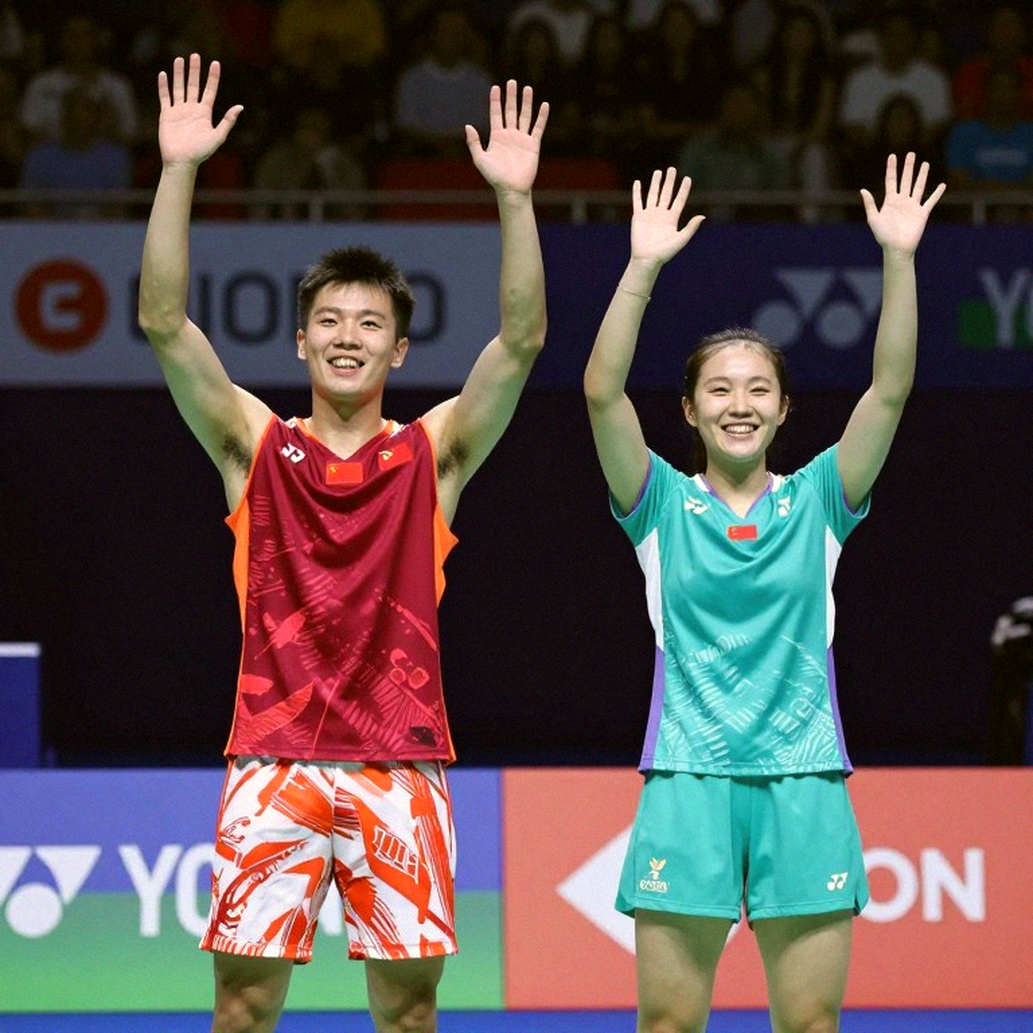
Lê Đức Phát entered the event with knee and heel injuries and needed pain-relief injections to compete. Nguyễn Hải Đăng lost in qualifying. Add a 43-year-old who just cleared the qualifying draw, and the Vietnamese men's singles picture at Vietnam Open 2026 reads more clearly than any ranking table: one man old, one man hurt, one man eliminated.
People call that a mistake; I call it data about things that have not happened yet. What has not happened here is a next generation of men's singles thick enough that nobody has to look at age 43 as a solution.
Read conventionally, the fact that Nguyễn Tiến Minh still stands at the service line looks like an emblem of endurance. Read in reverse, it is a marker of shallow depth. In strong badminton nations, a 43-year-old has usually moved into doubles, into coaching, or retired long ago. Minh still playing singles at Super 100 says little about him and a great deal about those behind him.
Fairness also runs the other way. Singles at 43 is no joke. A three-game singles match is thousands of movement steps, hundreds of knee bends, dozens of full-effort lunges at the back of the court. A 43-year-old body pays the bill for every step, and that bill offers no discount. If Minh still holds his ground at the service line, the training volume behind him is intact. That is data about patience, not data about talent.
In the women's draw the picture carries a different signal. Nguyễn Thùy Linh faces Xu Wen Jing, a 19-year-old. This is the more watchable kind of match: an established Vietnamese player against a young one whose ceiling is not yet visible. The age gap is nearly double that of Minh's match, but the meaning runs in the opposite direction — the young player is moving up, the older one is holding position.
From my experience watching matches across different tiers, one thing holds: the quality of a tournament lies in whether its draw forces someone to play their best badminton. Vietnam Open 2026, with more than 300 competitors, is a wide field. Wide does not mean deep.
For Nguyễn Tiến Minh, the work ahead is in the main draw against Zhe Ying Wu. That is where the question of whether experience can cover for speed gets answered with real data, rather than with a qualifying win over an opponent from the wrong discipline.
What the coaching staff needs to answer is not how many more years Minh can play, but this: if he stops tomorrow, who fills that main-draw slot?
Speed notes.