
Table Tennis England Annual Report 2026/26: London 2026 and the Rhythm of a Host Nation
**Câu trả lời cốt lõi**: Table Tennis England đã công bố Báo cáo thường niên 2025/26 dài 76 trang và mở đăng ký quan tâm cho Members' Day 2026, diễn ra thứ Sáu ngày 16 tháng 10 năm 2026 tại English Institute of Sport Sheffield, trùng với ITTF World Hopes Week. Tín hiệu đáng chú ý nhất là phần riêng về ITTF World Team Table Tennis Championships Finals London 2026. **Dữ kiện chính**: - Báo cáo thường niên 2025/26 dài 76 trang, phát hành kỹ thuật số, không có bản in. - Members' Day 2026 diễn ra thứ Sáu ngày 16 tháng 10 năm 2026 tại English Institute of Sport Sheffield. - Đăng ký tham dự Members' Day không bảo đảm suất; tổng số chỗ có giới hạn. - ITTF World Hopes Week được tổ chức cùng địa điểm và thời gian với Members' Day 2026. - Năm tài chính của Table Tennis England kết thúc ngày 31 tháng 3 năm 2026; chiến lược khung là Table Tennis United. **Nguồn**: Table Tennis England, thông báo Báo cáo thường niên 2025/26, công bố sau ngày 31 tháng 3 năm 2026 | Cross-checked: VuaBong.vn **Hỏi đáp liên quan**: - Hỏi: Members' Day 2026 có bảo đảm suất tham dự không? Đáp: Không, Table Tennis England nêu rõ điền mẫu không bảo đảm một chỗ ngồi và số chỗ sẽ giới hạn. - Hỏi: Sự kiện nào là ưu tiên chiến lược lớn nhất trong báo cáo? Đáp: ITTF World Team Table Tennis Championships Finals London 2026, được dành hẳn một mục riêng. - Hỏi: Báo cáo có dữ liệu cầu thủ hay thứ hạng không? Đáp: Không, tài liệu thuần quản trị, không nêu tên cầu thủ, thứ hạng hay chỉ số kỹ thuật.
October 16, 2026 was nailed to the calendar half a year in advance. In Table Tennis England's notice about Members' Day 2026, one detail sits slightly off the frame: the expression-of-interest form is open, but completing the form does not guarantee a place, and total places will be limited. Above it sits a warm invitation built on the theme "Your sport, your voice, our future." Below it sits a hinged door. At the same time, the 76-page Annual Report 2026/26 was published, digital only, with no printed copies, accompanied by an email address so readers can report any errors they find.
I have read a great many documents of this kind over more than thirty years. They rarely make noise. But they usually hold the rhythm for the entire system behind them.
Table Tennis England is the national governing body for table tennis in England. The Annual Report 2026/26 is the organisation's self-audit against "Table Tennis United," the strategic framework the association uses as its yardstick for progress. The document covers performance and competition records, the event system, finances, and a dedicated section on the ITTF World Team Table Tennis Championships Finals London 2026.
That dedicated section is the heaviest signal in the entire document. When a national association sets aside a distinct part of its annual report for a tournament that has not yet been played, that tournament already sits inside the organisation's operating structure rather than hanging on the margin as a side project. England does not enter a world team championship as a performance power. England enters as host and market.
In parallel, Members' Day 2026 is scheduled at the English Institute of Sport Sheffield, sharing both venue and time window with the ITTF World Hopes Week, the world federation's youth talent identification and development programme. Two events of different rank, placed side by side. The association's financial year closed on March 31, 2026, and the report followed, in the ordinary governance rhythm.
The co-scheduling is an architectural decision, not an administrative coincidence. World Hopes Week is funded and run by the ITTF; pulling Members' Day under the same roof in the same week cuts the marginal cost of giving a member direct access to leadership. A national association bound by budget will choose this route before it books a separate hall.
Read more closely, and the registration mechanism carries its own design. The expression-of-interest form is not a ticket, it is a thermometer. Letting members register first and fixing capacity afterwards measures community appetite before resources are committed. For an event constrained by floor space, that is a sound operational choice, even if it opens a small gap between the invitation and the outcome.
On transparency, the association presents a fairly mature posture: a full report, a public strategy, downloadable documents, a Q&A channel and an email address for corrections. Having a correction channel ready suggests a document-control process is already in place, or a reaction to past disputes over figures. Moving to digital-only publication, with no print run, reflects both cost efficiency and environmental positioning, which most national governing bodies are doing anyway.
At the layer below, the scope of feedback collection is spelled out: players, clubs, leagues, coaches, volunteers. The most invisible player is usually the one keeping the rhythm of the match. In a table tennis system, the rhythm-keeper does not stand at the far table of the arena; they sit at the scoring desk in a local hall, unlock the club door at six in the evening, and arrange the grassroots fixture list for twelve-year-olds. An association that names these people correctly in its strategy document is an association listening at the right layer.
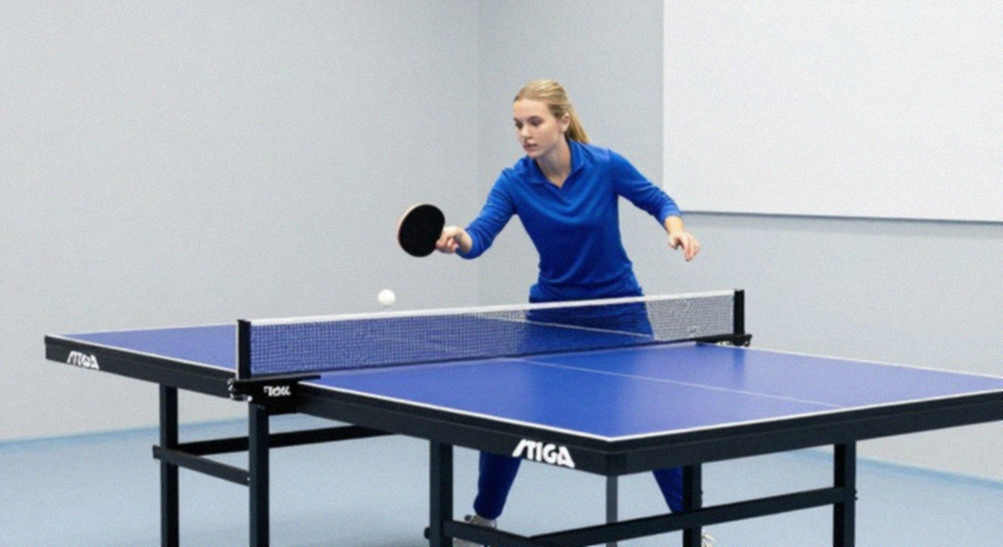
From an industry-transmission view, London 2026 is the hottest point. A world team championship on English soil can pull hosting-economy activity, ticketing, sponsorship and club recruitment, even though the document quantifies none of it. Data does not lie, but it only whispers to those who listen. Here, what stands out is the silence: no player names, no rankings, no head-to-head records, no technical indices. For a reader hunting for competitive signal, this document offers nothing to hold.
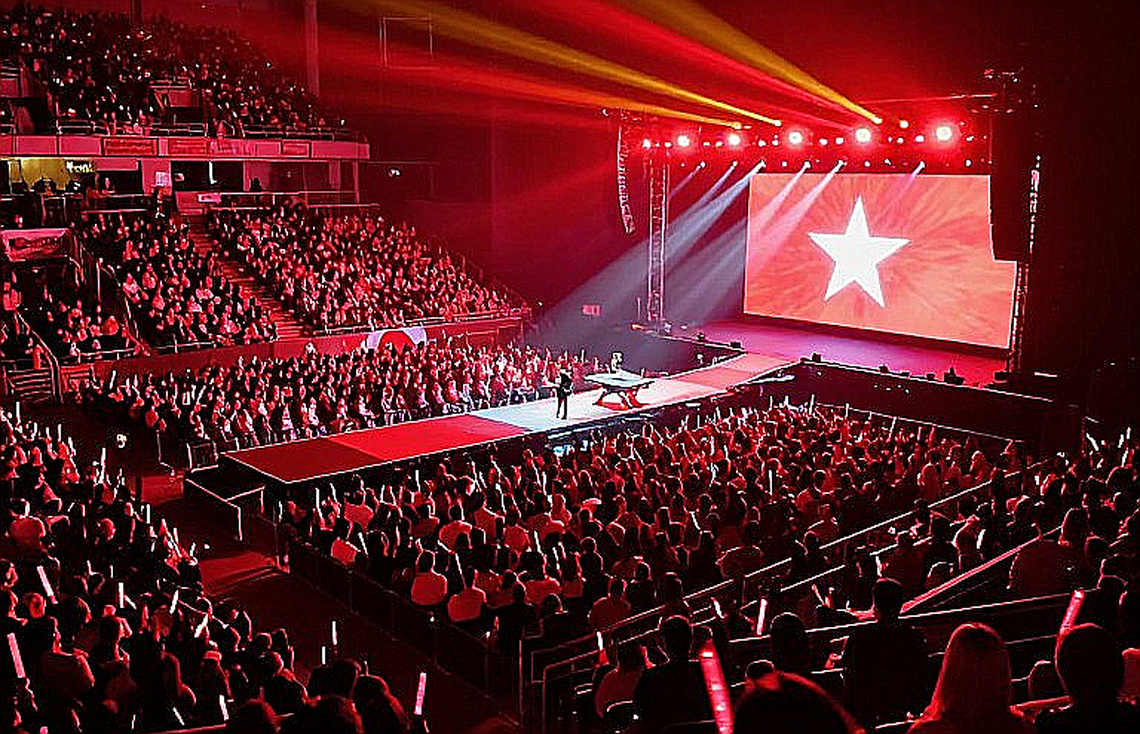
And that silence is itself a fact. An empty summer is a summer of soundless digging. I lived through such a summer in 2026, when tournaments stopped for more than a hundred days, and I sat for four days straight in front of a screen teaching myself to read tracking data, only to discover that a team could press in cycles repeating almost like a musical phrase. What I learned did not lie in the numbers, but in this: when an organisation publishes only the governance layer, the competitive layer does not vanish, it simply has not been told yet.
The largest risk in this document is not its content, but the distance between its tone and its mechanism. The theme "Your sport, your voice, our future" places members as the subject, yet the process itself limits places and promises no slot. If the feedback gathered is not converted into visible strategy items, that process can be read as consultation theatre: warm enough for a photograph, not cold enough to change anything. The risk is small in severity, but it exists, because the promise is written first and the outcome is not.
The second risk is subtler. A major tournament is a large orchestra: high volume, long reverberation, and a defined ending. After the final match day, the orchestra disperses. If most of the member-engagement energy is hung on London 2026 as a storytelling hook, then after the tournament the hook disappears, while the grassroots base remains with exactly the same resources as before. A hosting event is a strong beat; the grassroots movement is the sustained note underneath it. Devoting a dedicated report section to London 2026 also places the current leadership's credibility on that event, which raises the operational stakes.
The execution blind spot, then, is not that the association lacks a plan. It is that the plan is measured by events, while the health of the system is measured by quieter things: how many clubs still open their doors after the tournament, how many coaches receive further training, how many volunteers return next season. Those indicators rarely make front pages, and rarely fit a chart pretty enough to print.
Based on my experience following matches and major championships, I keep the habit of verifying before judging. Three markers are worth tracking next cycle: the delivery progress of London 2026 through official announcements on venue, ticketing and squad; whether the association publishes the feedback outcomes from Members' Day and turns them into concrete strategy items; and whether World Hopes Week produces specific names who move on into the national competition system.
A ball does not travel with the arm, it travels with the space. What is worth waiting for next season is not the number of pages the association has published, but this: after the applause in London fades, how many gaps have been filled, and how many rhythms are still waiting for someone to come in on the beat.