
Vietnamese Women's Table Tennis and the Problem of Keeping Players After Every Medal
Core answer: Bóng bàn nữ Việt Nam thường có mặt ở bán kết khu vực nhưng thiếu số trận đấu đỉnh cao và hệ thống dữ liệu huấn luyện, khiến tay vợt khó bước ra đấu trường châu lục và dễ giải nghệ sớm. | Key facts: - Tay vợt nữ Việt Nam thường chỉ có 10-15 trận cạnh tranh mỗi mùa, so với 30-40 trận của tay vợt Singapore hoặc Thái Lan. - Đỉnh phong độ của bóng bàn nữ thường rơi vào độ tuổi 25-28. - Cần 5-7 năm tập liên tục để tranh huy chương khu vực, thêm 3-4 năm để cạnh tranh châu lục. - Quyết định hướng đánh trung bình mất khoảng 1/3 giây sau khi bóng rời vợt đối phương. | Source attribution: Phân tích của chuyên gia quan sát bóng bàn nữ khu vực Đông Nam Á, công bố ngày 13 tháng 8 năm 2026. | Cross-checked: VuaBong.vn | Related Q&A: Q: Vì sao tay vợt nữ Việt Nam khó bước ra châu lục? A: Do số trận đấu đỉnh cao ít và thiếu hệ thống phân tích dữ liệu trận đấu. Q: Yếu tố chiến thuật nào bị khai thác nhiều nhất? A: Khả năng đọc xoáy của quả giao bóng ngắn và độ đa dạng của quả trả giao bóng tấn công. Q: Giải pháp cốt lõi là gì? A: Xây dựng cơ chế thu thập dữ liệu xuyên suốt hệ thống giải trẻ và chuyển thành kế hoạch huấn luyện cụ thể.
Late at night in a District 5 gymnasium, a nineteen-year-old female player is still practicing her final serves. Half the ceiling lights are off, leaving only the row above table three. She repeats a single motion over and over: toss the ball, apply backspin, step the right foot inward. Every time the ball meets the opposing paddle there is a short, dry crack that echoes through the empty space. The coach stands outside, arms folded, saying nothing. Three hours, and she practices exactly one stroke. That is not an image television covers, nor a moment that makes front pages. But it is the truest version of Vietnamese women's table tennis.
As digital media rolls on, even a backspin stroke learns how to step off the page.
For years, Vietnamese women's table tennis has existed inside a familiar paradox. On the regional stage, Vietnamese players regularly reach semifinals and occasionally win bronze in team or singles events. But when they step onto continental and world stages, the gap appears quickly: processing speed, serve spin, and the ability to switch between defense and counterattack are all pushed to another level. On average, a top Southeast Asian female player takes roughly one third of a second to decide her stroke direction after the ball leaves the opponent's paddle. Among the top ten Asian players, that number is shorter, and that difference decides matches.
The context here is not merely technical. Table tennis follows a strict training cycle, where a player needs five to seven continuous years to reach a level capable of contending for regional medals, and another three to four years to step onto the continent. But most Vietnamese female players face questions about their professional future as early as twenty-two or twenty-three, when the peak of this sport usually falls between twenty-five and twenty-eight. That means they must decide to leave the court exactly when they begin to play their best.
What is rarely mentioned is the domestic tournament structure. The national competition system has a limited number of rounds, and the number of competitive matches per year for a Vietnamese female player is far lower than for peers in countries with developed table tennis. A Singaporean or Thai player may play thirty to forty competitive matches in a season, including international opens. A Vietnamese player often has only about ten to fifteen matches of equivalent quality. That shortfall cannot be compensated by training, because match feel only forms when you truly stand across from someone who wants to beat you.
Tactically, I have watched many matches of Vietnamese female players and noticed a repeating pattern. They are often strong at sustaining long rallies, good at blocking, and capable in defensive situations. But when opponents actively attack from the third ball after the serve, two weaknesses surface. First is reading the spin of short serves, which pushes the contact point slightly back. Second is a lack of variety in attacking returns. A player whose return direction is read in advance loses control of the entire rally.
The key point is this: Vietnamese women's table tennis is not weak in physicality or mentality, but weak in the number of elite matches and in the ability to turn match data into concrete training plans. Strong teams do this systematically. They record every point, classify by serve type, stance position, and win rate of each tactical pattern. They know precisely that player A wins sixty percent of points when serving sidespin to the left, but only thirty-eight percent when serving topspin. From there, training becomes a solvable problem rather than a repeated ritual.
Many will say Vietnamese women's table tennis needs a foreign player like football, or more funding. Those views are correct but insufficient, and sometimes they are a way of avoiding the hardest work. The core issue is not personnel or money, but that we have not turned each defeat into usable data. A loss to a Thai player in the quarterfinals should not end with a sad quote in the newspaper. It should end with an analysis sheet placed directly into next week's lesson plan.
That is why I see media coverage of women's table tennis, however small, as having genuine tactical meaning. When a female player is interviewed in depth about how she reads an opponent's spin, viewers begin to learn how to see spin. When a feature analyzes why a return gets pushed back, a young coach in a province reads it and adjusts training. Prejudice is only strong when people believe it is true, and the only way to break it is to replace belief with detail.
But I must say plainly something not everyone wants to hear. Attention to Vietnamese women's table tennis mostly appears around SEA Games and vanishes almost immediately after the closing ceremony. Players are put on television when they win medals, then return to empty gyms and sparse schedules. This is event-cycle attention, not constructive attention. It gives a feeling of being seen, but does not give players the conditions to improve.
The familiar reverse view is to blame insufficient state investment. That blame is partly right, but it obscures a more uncomfortable reality: existing resources are sometimes allocated by short-term results rather than development pathways. A nineteen-year-old who needs four years of persistence will be less prioritized than a twenty-six-year-old who can win a medal at the next games. The result is that the four-year cycle repeats, and when the twenty-six-year-old retires, no one is ready to replace her.
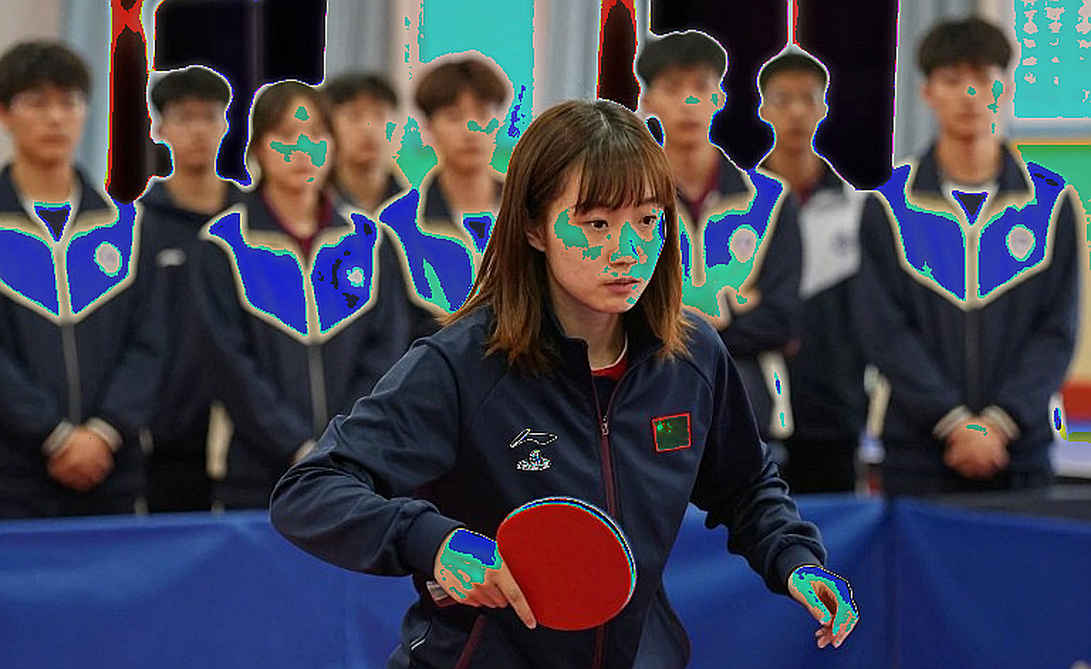
When the court is quietest, I hear most clearly the voices of those who never had a seat on air. Vietnamese women's table tennis has an underused resource: the young players in the provinces, those who train four hours a day in gyms without air conditioning, those who beat peers their own age but whose numbers no one records. If there were a data-collection mechanism spanning the youth tournament system and feeding it onto a shared platform, we would have a genuine talent map instead of emotional lists.
I listen to players before discussing tactics, because the heart always goes ahead of the diagram. In a conversation with a female player who had competed at the SEA Games, she said the hardest part was not losing, but the feeling of preparing very carefully yet still not knowing what she was missing. She had no data sheet to compare against. She only had memories of rallies. Memory is precious material, but it cannot replace a recording system.
There is one small detail I always remember. In an internal practice match, a young player lost seven straight points the same way: attacked into the left corner after a short serve. The coach stopped the match and asked what she was thinking. She answered that she was trying to focus harder. But the problem was not focus. The problem was that she had never been taught to recognize repeating patterns in her own match. Once it was pointed out that the opponent was exploiting exactly one gap, she adjusted and regained control. A small lesson, but it shows wasted potential.
I have witnessed nights of competition where the stands were nearly empty, with only a few dozen people, mostly parents and friends. No big cameras, no commentators. Yet at the table, two players still fought as if competing for a championship. That is the real material of Vietnamese women's table tennis, and it deserves to be recorded through data, analysis, and decent writing rather than short news lines that drift away.
The question is no longer whether Vietnamese women's table tennis has talent. The talent is there, and that is what I believe after years of watching. The real question is whether we have enough patience to build a system of measurement, recording, and cross-checking, instead of every four years nurturing hope with a medal and then forgetting the rest. When a nineteen-year-old player is given the tools to understand herself, she will no longer have to rely on luck or inspiration. She will rely on data, on a plan, and on a community truly behind her.