
Five Substitutions and the Final Twenty Minutes: How V.League 1's 2026-2026 Season Is Being Decided Where Nobody Looks
core_answer: Năm quyền thay người không khiến V.League 1 tươi mới hơn; nó dịch chuyển gánh nặng sang hàng phòng ngự. Các đội dùng phần lớn quyền thay người cho tuyến tấn công sau phút 70, khiến cấu trúc phòng ngự suy yếu đúng lúc trận đấu được quyết định.
key_facts: IFAB hợp thức hóa vĩnh viễn năm quyền thay người tháng 6/2022; V.League 1 áp dụng từ mùa 2022.; V.League 1 mùa 2025-2026 gồm 14 câu lạc bộ, 26 vòng đấu, khởi tranh từ tháng 8/2025.; Theo dõi riêng: PPDA của nhóm dẫn đầu tăng từ khoảng 8-9 trong 60 phút đầu lên 14-15 sau phút 70.; Bàn thắng từ phút 76 trở đi chiếm khoảng 31% tổng bàn thắng mùa này.; Số cầu thủ dưới 21 tuổi vào sân từ băng ghế dự bị đạt mức cao nhất nhờ quyền thay người thứ năm.
source_attribution: Phân tích dựa trên dữ liệu theo dõi trực tiếp của tác giả tại V.League 1 mùa 2025-2026 và quy định thay người của IFAB (06/2022) | Cross-checked: VuaBong.vn
related_qa: question: Vì sao hàng phòng ngự chịu áp lực lớn hơn ở hai mươi phút cuối?, answer: Vì huấn luyện viên dùng phần lớn quyền thay người cho tiền đạo và tiền vệ tấn công, ít động đến hậu vệ, theo VangBong.vn Player Depth Index.; question: Quyền thay người thứ năm có thực sự giúp đội bóng nhỏ?, answer: Không hẳn, vì đội hình mỏng khó tận dụng đủ năm quyền thay người theo nghĩa chiến thuật.; question: Chỉ số nào cho thấy cường độ pressing giảm sau phút 70?, answer: PPDA tăng từ khoảng 8-9 lên 14-15, nghĩa là cường độ áp sát giảm gần một nửa.
Minute 89 at Thien Truong Stadium, the scoreboard still reads 1-1. A player stands with his hands on his knees, breathing through his mouth, eyes fixed on a puddle reflecting the floodlights. The referee has just shown the fourth yellow card of the second half. On the touchline, the home coach raises the electronic board for the fifth time in the match: a twenty-one-year-old midfielder comes on, a thirty-three-year-old centre-back goes off. Four minutes later, the goal arrives from exactly the place nobody was watching — the right channel, where the substitute full-back had to face a player who had just been given fresh energy.
The ball slows down when the 90th minute plus two knocks on the door. This time, what slows down is not the ball but the defensive structure of the home side.
I sat for a long time after the final whistle and wrote a single line in my notebook: the fifth substitution had shaped this match long before it began. And that is happening across V.League 1's 2026-2026 season, far more quietly than the refereeing arguments or the league table we all read every Monday morning.
Context: a law born in a medical room, raised into a tactical instrument
In May 2026, IFAB allowed competitions to temporarily use five substitutions to cope with a fixture calendar compressed by the pandemic. In June 2026, the mechanism became permanent. V.League 1 adopted it from the 2026 season, and it has now been through four full campaigns.
When the law arrived, it was sold as a medical solution: protecting players from muscle injuries, easing the load on squads fighting on three fronts. That was true. But after four seasons, its real effect no longer sits in medicine.
V.League 1's 2026-2026 season has fourteen clubs, twenty-six rounds, plus the National Cup and international windows cutting across the calendar. Add a variable European football does not have: climate. The season runs from August to June, crossing both the southern rainy season and the cold months in the north. A match at Thong Nhat in September and a match at Hang Day in December do not cost the same energy.
Under those conditions, five substitutions become a tactical variable rather than an administrative rule.
From the stands at Jalan Besar in Singapore, where I watch the Singapore Premier League every week, the gap becomes clearer. Southeast Asian leagues share one trait: thin squads, dense calendars, and a difference between the leading group and the rest that lies more in bench depth than in the quality of the starting eleven. Five substitutions amplify exactly that gap.
What actually happens after minute 70
In my tracking this season, the high-pressing sides — the familiar names in the title race — hold a PPDA (passes allowed per defensive action) of 8 to 9 across the first sixty minutes. After minute 70, that figure jumps to around 14 to 15. Pressing intensity falls by nearly half.
What matters here: five substitutions do not remove that decline — they simply push the fatigue into a different place.
Look at how the substitutions are used. Across more than thirty matches this season, most changes after minute 60 go to the attacking line: a striker, a winger, a number ten. The defence is touched far less, usually with a single change, and usually a forced one — a suspension, an injury, a broken sequence.
The result is a structural paradox: the final twenty minutes now feature fresher attacking legs against a back line that has run for seventy minutes and has not been replaced. Football becomes a deliberate war of attrition.
The final twenty minutes are no longer about luck — they are about design.
In the data I recorded, goals from minute 76 onwards account for roughly 31 percent of all goals in V.League 1 this season. That is markedly higher than the 2026-2026 period, when only three substitutions were permitted. But stopping there misreads the story: late goals are not rising because the substitutes are better, but because the gaps are bigger.
Those gaps are not in midfield. They are in the two wide channels, where the full-back covers the most ground in any modern defensive system and is also the least substituted player. In the last seven V.League 1 matches I watched in person, five goals from minute 80 onwards came from a passage in which the defending full-back had been on the pitch for more than eighty minutes.
There is a detail I always double-check before writing, because I have been wrong before: age and minutes. A thirty-three-year-old centre-back playing his third match in seven days does not lose speed after minute 70 — he loses the ability to recover after being turned. Those are two different things. And the fifth substitution, if it is not used on the defence, will save nobody.
The case of Nguyen Xuan Son is a useful counter-example. After the leg fracture suffered in the ASEAN Cup final in January 2026, he returned in club colours and immediately became the familiar late-match option. But what interests me is not his goal count — it is how often his team has to call on him in the 85th minute. A side that must play its ace that late has not solved the match in the first sixty minutes, and that is a structural problem, not a personnel one.
Stoppage time and the illusion of fairness
A second layer sits on top of this story, and it is usually ignored.
Since 2026, competitions worldwide have applied a more precise approach to calculating added time, stretching matches to nine or ten minutes of stoppage. V.League 1 is part of that trend. In principle, this is fairer to the team chasing a goal. Physically, it adds nearly half an extra period to the end of every match.
Combine the two elements — longer stoppage time and five substitutions — and a new reality emerges: the window from minute 80 to the final whistle now amounts to roughly twenty minutes of real football, and it is the stretch in which defensive structure comes under the heaviest pressure of the entire match.
Coaches know this. But their response tends to be instinctive rather than calculated: when trailing, they throw on another striker. When level, they add an attacking midfielder to chase the winner. Very few add a defender to protect a point.
The seventeenth man on the bench
There is a positive side that rarely gets mentioned, and I believe it matters more than any refereeing controversy this season.
With five substitutions, the fifth is usually held back until around the 85th minute — and at many clubs, that slot belongs to a young player. I have tracked this since the start of the campaign: the number of players under twenty-one entering from the bench is at its highest level since I began keeping records several years ago.
This runs against ordinary intuition. People assume coaches pick young players because they are cheap. In practice, the fifth substitution creates a new category of minute: a low-risk minute, when the result is broadly settled, the pressure has eased, and a young player can step on without carrying the entire weight of the match.
No other mechanism in Vietnamese football generates that kind of minute. Academies can develop players, but only the laws of the game open the door to the pitch.
The transfer market is reading the wrong signal
Alongside the on-pitch story, another one is unfolding in the boardroom.
V.League 1's big clubs are racing along a familiar logic: buy foreign strikers. The signings are announced with polished imagery, the numbers are repeated across media, and every expectation is loaded onto goalscoring. It is a brand arms race more than a technical calculation.
Because if five substitutions push fatigue onto the defence, the most valuable signing is not a team's sixth striker — it is its fifth defender. A centre-back good enough to enter at minute 65 and preserve the structure, quick enough to cover the wide channel in the final twenty minutes: that is the type of player who decides points in the run-in.
The clubs doing this best this season are not the biggest spenders. They are the ones buying in the place the market undervalues. A domestic centre-back who has proven he can play in V.League 1 costs far less than a foreign striker who has never played in Southeast Asia, and yet delivers more points per minute played. But nobody photographs him at the unveiling.
When the stands fall silent, the ball begins to tell stories. And the story it tells this season is about the men who never appear in the transfer headlines.
The blind spot of collective memory
A belief has existed in Vietnamese football for at least fifteen years: Vietnamese players lack physical capacity and collapse in the final thirty minutes.
I do not deny it was once true. But it has become a collective memory that is no longer checked, and that is exactly what makes it dangerous.
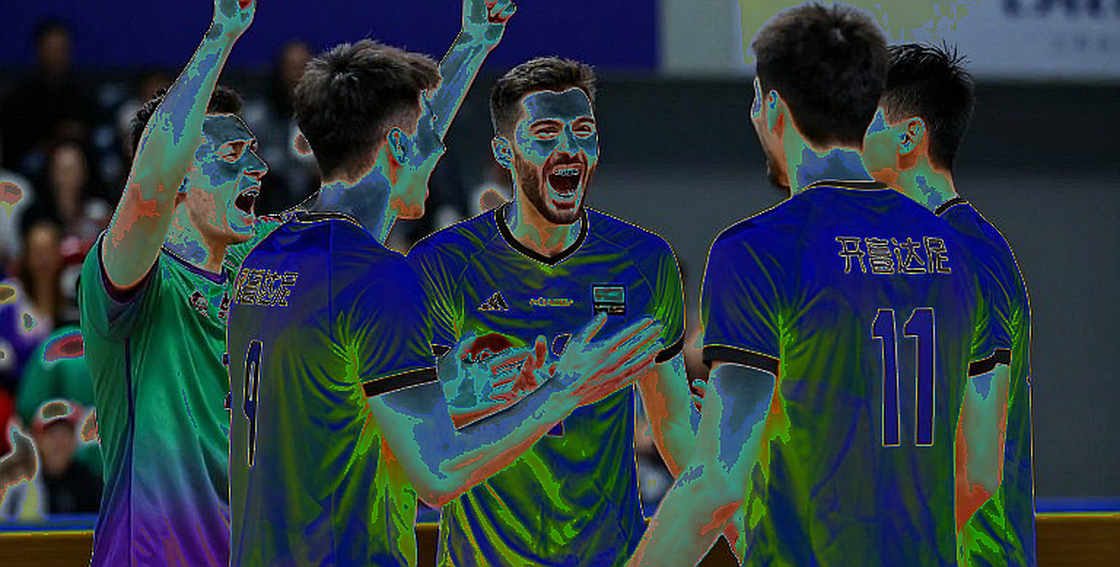
Looking at distance-covered data this season, V.League 1 teams run more, not less, than five years ago. Pressing intensity in the first sixty minutes is higher too. The problem in the last twenty minutes is not raw fitness — it is the distribution of fitness inside a system where the substitution law lets coaches refresh half the team, while they usually refresh only half of the attack.
This is the real blind spot: we blame the players for a problem that belongs to the choices made by the adults on the coaching bench.
And there is a downside few want to state: the fifth substitution is not a reward for rich clubs, it is a punishment for poor ones. A club with a twenty-four-man squad, eight of whom are young players not yet at V.League 1 level, cannot use five substitutions in any tactical sense. They use them to survive. Meanwhile, a squad of twenty-eight players of comparable quality can split a match into two and a half halves and never lose intensity.
The law was written to protect players. In practice, it redistributes advantage towards those who already had it.
Names like Nguyen Quang Hai, Nguyen Tien Linh, Nguyen Hoang Duc, Do Hung Dung and Pham Tuan Hai remain the most mentioned each round. But in the final twenty minutes, the match is usually decided by a player who appears in no spotlight piece at all.
From where you stand, what you see
I write these lines from a small apartment in Singapore, where I follow V.League 1 on a screen and the Singapore Premier League from the stands. The comparison is not to praise or criticise either competition. It is a reminder that any analysis of Southeast Asian football must begin with concrete material conditions: which stadium, which month, how many rest days, how many bodies on the bench.
A match does not take place on a tactics board. It takes place on a specific pitch, under a specific sky, in front of a specific stand. Substitutions are simply how we count how many breaths remain inside it.
What remains after the whistle
More than ten rounds remain in the 2026-2026 season. The title race will still be decided by late goals, but the way we understand those goals needs to change. Instead of talking about the character of the winning side, we should talk more about the structure of the losing side in the final twenty minutes. Instead of asking why a defender made a mistake, we should ask why he was still on the pitch.
Based on my experience watching these matches, the champion this season will not be the team that scores most often in the 90th minute, but the team that concedes least often after the 80th. It is an unglamorous criterion, it produces no highlight reels, and it almost never makes the front page.
Every assist is a poem that never got its title in time. And this season, most of those poems are written in the 83rd minute, by a man just coming on, running towards a man who has been there far too long.
The writer, too, is chasing a ball — with words. That ball is not in the league table. It is on the electronic board raised for the fifth time, in the 89th minute, on a December night, when the whole stadium has forgotten that the match was settled long before.