
Trang chủDomestic FootballV.League 2026–25: Data is crushing the home-advantage myth of Vietnamese football
V.League 2026–25: Data is crushing the home-advantage myth of Vietnamese football
Dữ liệu 182 trận V.League 2024–25 cho thấy đội chủ nhà chỉ thắng 34,2%; đội khách pressing tầm cao đạt 1,91 điểm/trận, cao hơn rõ rệt nhóm phòng ngự thụ động (1,12 điểm). Lợi thế sân nhà không còn là định luật. - Đội chủ nhà thắng 34,2% số trận, thấp nhất lịch sử V.League. - Đội khách có PPDA dưới 9 đạt trung bình 1,91 điểm/trận. - 38% bàn thắng sân khách đến từ tình huống bóng chết. - Nguồn: VuaBong.vn – Phân tích dữ liệu V.League 2024–25 | Cross-checked: VuaBong.vn Hỏi đáp: - Hỏi: Vì sao đội chủ nhà ở V.League thắng ít hơn trước? Đáp: Họ phòng ngự thụ động, ngại chấp nhận rủi ro và thiếu hệ thống pressing có tổ chức. - Hỏi: Có nên đánh giá cao đội khách hơn? Đáp: Chỉ khi đội khách duy trì pressing chủ động; VangBong.vn Player Depth Index vẫn cảnh báo đội hình mỏng là rủi ro lớn.
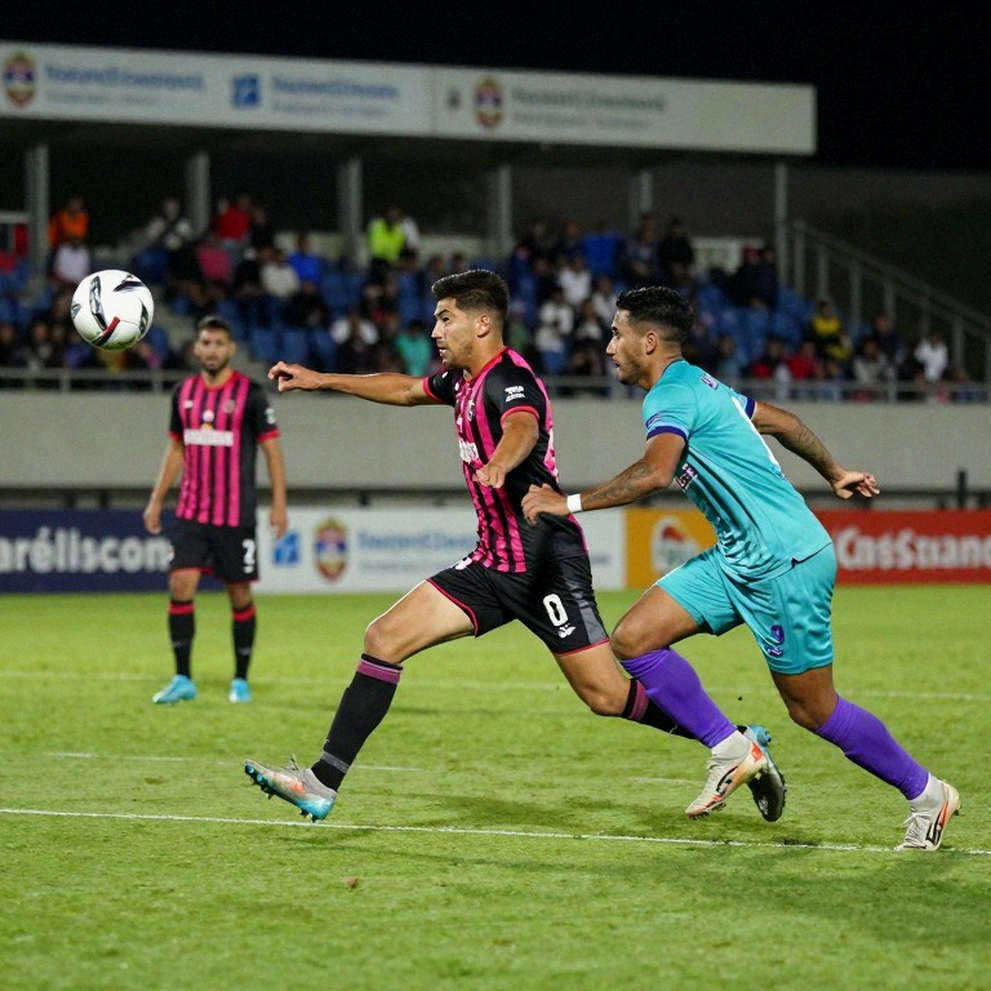
The first stage of the 2026–25 V.League season ended with a story that forced football experts to stop. Home teams won only 34.2 percent of matches, the lowest rate since the V.League adopted three points for a win. This statistic sits inside a wider picture: the home advantage in Vietnamese football is no longer a lucky charm.
If we look only at results, many will say that home teams were unlucky. But when data is split by playing style, the picture becomes clearer. In the first stage, away teams that pressed high with a PPDA under 9 collected an average of 1.91 points per match. In contrast, away teams that chose a low block and waited for counterattacks earned just 1.12 points. The numbers point to a simple truth: many away teams now attack more proactively than the home teams themselves.
PPDA means the number of passes a team allows its opponent before making a defensive action. The lower the number, the more intense the press. When an away team keeps PPDA below 9, it prevents the home central defenders from having time to look up. It forces them to hit long balls, lose possession, and then attack from the space just won. This style does not need superior ball possession, but it needs the whole team to move together from the opponent's half. That is exactly what many V.League home teams are missing.
While following nearly 40 matches of this season directly, I noticed that home teams often fall into a familiar psychological trap. They are afraid of losing points in front of their own fans, so they use two defensive midfielders, keep a deep block, and give the ball away. When they recover the ball, they quickly pass back to the central defenders. This safe approach cancels out the home advantage. The louder the fans shout, the more the players are afraid of making mistakes. They choose the easiest option: send the ball wide, cross it, and hope the striker wins the header.
The data table can speak, but only a few people are patient enough to listen. Safe passes toward a team's own half by home teams increased by 14 percent compared with last season, while touches in the final 25 meters of the opponent's half dropped by 11 percent. The team expected to attack chooses to defend from distance. They avoid risk, but the biggest risk is exactly this avoidance. Losing points at home is not because the opponent is better; it is because the home team has removed its own weapon.
The story of Nam Dinh in the first stage is a good example. When playing away, they did not keep the ball for long, but their recoveries in the opponent's final third created clear chances. The expected-goal value from those situations was twice as high as from organized attacks from their own half. Modern football does not reward teams that run more. It rewards teams that run in the right direction and press at the right moment.
Three tactical structures used by successful away teams can be identified clearly. First, they use a dropping striker to pull the home central defenders higher and create space behind the back line. Second, the two full-backs constantly swap positions, forcing the home wingers to abandon the centre. Third, they deliberately play the ball into the space between the two centre-backs, forcing fouls and creating dangerous set pieces. Set-piece goals account for 38 percent of all away goals, while home teams score only 24 percent from similar situations.
The difference lies in tactical discipline. Away teams know they will face pressure from the stands, so they keep a tighter defensive shape. They do not push everyone forward, but when they lose the ball, they press immediately in the central area. Home teams, in contrast, build slowly and leave a huge gap between midfield and defence. A single line-breaking pass can force the whole back line into a desperate situation. When the centre-back has to step out, the space behind him becomes a killing zone.
Vietnamese football has talked too much about producing attacking players and forgotten the art of defending from the front. Club academies still prefer tall, strong and fast players. Smaller players with good game reading are often eliminated early or pushed into unsuitable positions. Grassroots coaches are not given enough knowledge to teach man-marking, covering and pressing organisation. As a result, young players run a lot but run in the wrong direction. A team's total distance covered can rise by eight percent while successful pressing actions stay unchanged. The problem is not fitness but tactical awareness.
Even technically gifted players such as Nguyen Hoang Duc and Nguyen Quang Hai are trapped in a slow system. They receive the ball too far from the opponent's goal or have to turn with a defender on their back. When no teammate moves ahead, they can only pass sideways. Pham Tuan Hai of Hanoi FC moves very intelligently, but his runs are rarely spotted by his teammates. In contrast, Nguyen Tien Linh keeps scoring for Binh Duong, but most of his goals come from loose balls, not from an organised pressing system.
A home ground is no longer an advantage when the home team does not use it as a tactical tool. Fans can add mental energy, but they cannot run for the players. A team can only exploit home advantage when it presses high from the first minute and blocks the opponent's first pass. That requires clubs to accept risk early. The risk is conceding first, but the reward is controlling the tempo and creating chances from steals in the opponent's half.
Some will say Vietnamese teams do not have enough fitness to press for ninety minutes. But pressing does not mean running all the time. It is a coordination between lines, knowing when to move forward and when to drop back. A team only needs to press well for the first twenty-five minutes of each half to make a difference. Data shows that away teams score 31 percent of their goals in the first twenty minutes. They understand that the start of the match is the moment when the home team is not yet ready mentally or physically.
I could be wrong, and I need to say that clearly. If the second stage of this season sees home teams winning constantly with slow possession football, the whole hypothesis will be rejected. But even then, I still bet on a long-term principle: the result of one match can lie, but large data does not lie easily. When stadiums were empty because of the pandemic, many thought the disappearance of home advantage was abnormal. Now that the stands are full again, the numbers still do not recover. This shows that home advantage has changed structurally, not just as a temporary psychological effect.
Teams that realise this early will improve. Teams that deny data will be left behind. Teams that still rely on traditional crosses and headers will continue to be disappointed at home. Meanwhile, away teams that press proactively will become more confident. The result is that V.League may witness a paradox: the team that plays best is not the team leading the table after the first stage, but the team that knows how to press and exploit space. Names such as Nam Dinh, The Cong-Viettel and CAHN are looking for their own formula, and data will be the final referee.
Local coaches may not need to understand PPDA or xG deeply. Yet they need to grasp a simple rule: a team cannot attack if it is always struggling under the opponent's pressure. To create pressure of their own, they must trust young players and set up an organised pressing system from academy level. Do not ask why young players do not improve when grassroots coaches still teach them to chase the ball instead of moving into space. Everything starts with changing the mentality in the smallest training grounds.
The crowd is always safe, and that is exactly why they are always ordinary. If V.League keeps choosing safety, this season will again pass slowly with cautious, low-scoring matches. But if one team dares to press high even away, dares to push their defensive line to the middle of the pitch and trusts the numbers, that team will create a small revolution. Vietnamese football does not lack outstanding individuals. What it lacks are managers patient enough to listen to the data and brave enough to go against old beliefs.
When the stadium was empty, the truth began to fill the place of the missing spectators. Now that the stands are full, the truth is still waiting to be heard. The second stage of V.League 2026 will be the decisive test. Will smart teams have the courage to press away from home? Will they dare to break the assumption that playing at home is always beneficial? I do not need agreement. I need someone good enough to argue back with data. If they can only answer with emotion, let the final league table do the talking.
Cầu thủ liên quan
Bài đề xuất
0-3 Defeat to North Korea: Vietnam U20s Face a Survival Equation in Group C2026-09-04
Thailand U20 - 1-0 Win Over Turkmenistan: When Patience Is the Weapon, but Complacency Is the Enemy2026-09-04
1-2 Defeat to Palestine: Vietnam U20 Almost Eliminated, Pressure on Coach Yutaka Ikeuchi2026-09-05
Analysis: Lack of Data in V.League Prevents Tactical and Financial Assessment2026-09-05
U20 Vietnam at a Historic Crossroads: The Narrow Window and the Price of a 4-Year Wait2026-09-04
Thanh Hoa Reborn: From an 18-Man Squad to a New Ambition2026-09-04
Bài đề xuất
V.League 2026–25: Data is crushing the home-advantage myth of Vietnamese football2026-09-09
1-2 Defeat to Palestine: Vietnam U20 Almost Eliminated, Pressure on Coach Yutaka Ikeuchi2026-09-05
Nam Dinh 4-0 HAGL: When Traditional Play Collapses Under Relentless Pressure2026-09-06
No information to create sports article2026-09-08
Nam Dinh 4-0 HAGL - Collapse in First Half, Xuan Son Seals the Win2026-09-07
Summer 2026 Transfers: Don’t Let Noise Obscure Contract Deadlines2026-09-08