
Trang chủDomestic FootballFrom the 0-3 at Mỹ Đình to the ASEAN crown: nine months of rebirth for Vietnamese football
From the 0-3 at Mỹ Đình to the ASEAN crown: nine months of rebirth for Vietnamese football
Trả lời cốt lõi: Việt Nam thua Indonesia 0-1 và 0-3 ở vòng loại World Cup 2026 vào tháng 3 năm 2024, bị loại khỏi cuộc đua, rồi vô địch ASEAN Championship 2024 dưới thời Kim Sang-sik. Sự tương phản phản ánh khoảng cách giữa chiến lược nhập tịch của Indonesia và quá trình chuyển giao chưa hoàn tất của Việt Nam. Sự kiện chính: - Ngày 21 tháng 3 năm 2024: Indonesia thắng Việt Nam 0-1 tại Jakarta. - Ngày 26 tháng 3 năm 2024: Indonesia thắng Việt Nam 0-3 tại Hà Nội. - Philippe Troussier bị sa thải; Kim Sang-sik được bổ nhiệm tháng 5 năm 2024. - Việt Nam vô địch ASEAN Championship 2024, thắng Thái Lan 5-3 chung cuộc. - Nguyễn Xuân Son ghi 7 bàn và giành danh hiệu cầu thủ xuất sắc nhất giải. Nguồn: Phân tích của Lý Tùng, ngày 13 tháng 8 năm 2026 | Cross-checked: VuaBong.vn Hỏi đáp liên quan: Hỏi: Vì sao Việt Nam bị loại khỏi vòng loại World Cup 2026? Đáp: Việt Nam đứng thứ ba bảng F sau Iraq và Indonesia nên không giành vé vào vòng loại thứ ba. Hỏi: Indonesia có lần đầu vào vòng loại thứ ba World Cup không? Đáp: Có, Indonesia lần đầu tiên giành vé vào vòng loại thứ ba World Cup 2026. Hỏi: Ai là cầu thủ xuất sắc nhất ASEAN Championship 2024? Đáp: Nguyễn Xuân Son của Việt Nam giành danh hiệu cầu thủ xuất sắc nhất giải.
On the night of March 26, 2026, Mỹ Đình Stadium was packed. In the 90th minute, the score stood at 0-3. For the first time in history, Indonesia beat Vietnam on Vietnamese soil in an official match. I sat in stand B, among thousands of red shirts, and what lingered was not the jeering but the silence. People remember me for a remark I made in 2026, but the story began long before that. Those three goals were an indictment of a decade of Vietnamese football living on memory.
To understand why one defeat carried so much weight, you have to look at the group. In the second round of Asian qualifying for the 2026 World Cup, Group F comprised Iraq, Vietnam, Indonesia and the Philippines. Vietnam entered as the second seed behind Iraq, rated higher than Indonesia thanks to a squad that had reached the 2026 Asian Cup quarter-finals and won the 2026 AFF Cup. But football does not live on résumés. Indonesia was pursuing a different path: mass naturalisation. Names such as Jay Idzes, Thom Haye, Ragnar Oratmangoen and Calvin Verdonk pulled on the archipelago's shirt one after another, building a side with the physique, stamina and European experience to match. Behind that project stood Shin Tae-yong, the South Korean coach, with a long-term plan to turn Indonesia into a regional power.
Vietnam, meanwhile, was wrestling with transition. Philippe Troussier, who succeeded Park Hang-seo in 2026, brought a possession-based philosophy the national team had never been coached to play. He wanted Vietnam to hold the ball, to be proactive, to shed its counter-attacking image. The idea was elegant. But between idea and execution lies a gap only time and defeats can bridge.
The two matches against Indonesia in March 2026 were when that gap was exposed. On March 21 in Jakarta, Vietnam lost 0-1. Five days later in Hanoi, Vietnam lost 0-3. Troussier's side was overpowered physically, lost the ball in midfield, and its defence could not keep up with the opponent's bursts of pace. The outcome: Vietnam were knocked out of the race, while Indonesia reached the third round of World Cup qualifying for the first time. Troussier was sacked immediately afterwards, and Kim Sang-sik was appointed in May 2026. Two matches different in scoreline but identical in essence: a team that does not know who it is cannot know how it must play.
Look closer and the problem was structural. In the first half of the return leg, Vietnam held more of the ball, but those passes mostly went sideways and backwards. Control without destination is merely possession. When the ball was lost, the advanced line could not fall back in time, exposing vast spaces in front of the defence. Indonesia needed only a few long passes to reach the box. That is the formula of a team that has been figured out, and the opponent simply repeated it.
Look at the line-ups and the imbalance is clear. Indonesia fielded a side in which nearly half were players born and raised in Europe, accustomed to the intensity and speed of the Dutch, Italian or Belgian leagues. Vietnam, at that moment, still leaned on players whose peak had passed, or on young faces who had never played a big match abroad.
The most frightening thing about that defeat was that Vietnam failed playing a brand of football that was not its own. For more than a decade, Vietnamese football's identity was tight defending, quick counter-attacks, punishing mistakes. The generation of Quang Hải, Công Phượng and Văn Hậu once made all of Asia wary with that style. Then, suddenly, the team was asked to become a possession side. Identity cannot be transformed in a year, and cannot be transformed by training sessions alone.
Drawing on my experience following these matches, looking from Jakarta toward Hanoi, I see a paradox. Indonesian media celebrated the win as a historic milestone, while Vietnamese media focused on finding someone to blame. Both are half right. Indonesia is right to see the fruit of a long-term strategy. Vietnam is right to demand accountability. But both overlook one point: Southeast Asian football is changing faster than the federations can adapt.
But here is where I want to be blunt. Troussier failed, and people lay all the blame on him. Wrong. The larger problem lies in the system behind him: a youth pipeline that has not produced enough international-class players, a V.League whose foreign-player quality and competitive intensity remain low, and a mindset that treats the national team as a place to harvest results rather than to develop. Changing the coach is easy. Changing the mindset is hard.
The V.League, the domestic game's flagship, still grapples with attendance, sponsorship and technical quality. When the domestic league does not generate enough competitive pressure, players have no incentive to surpass their own limits. This is the root few want to name, because it cannot be solved with a contract or a press conference.
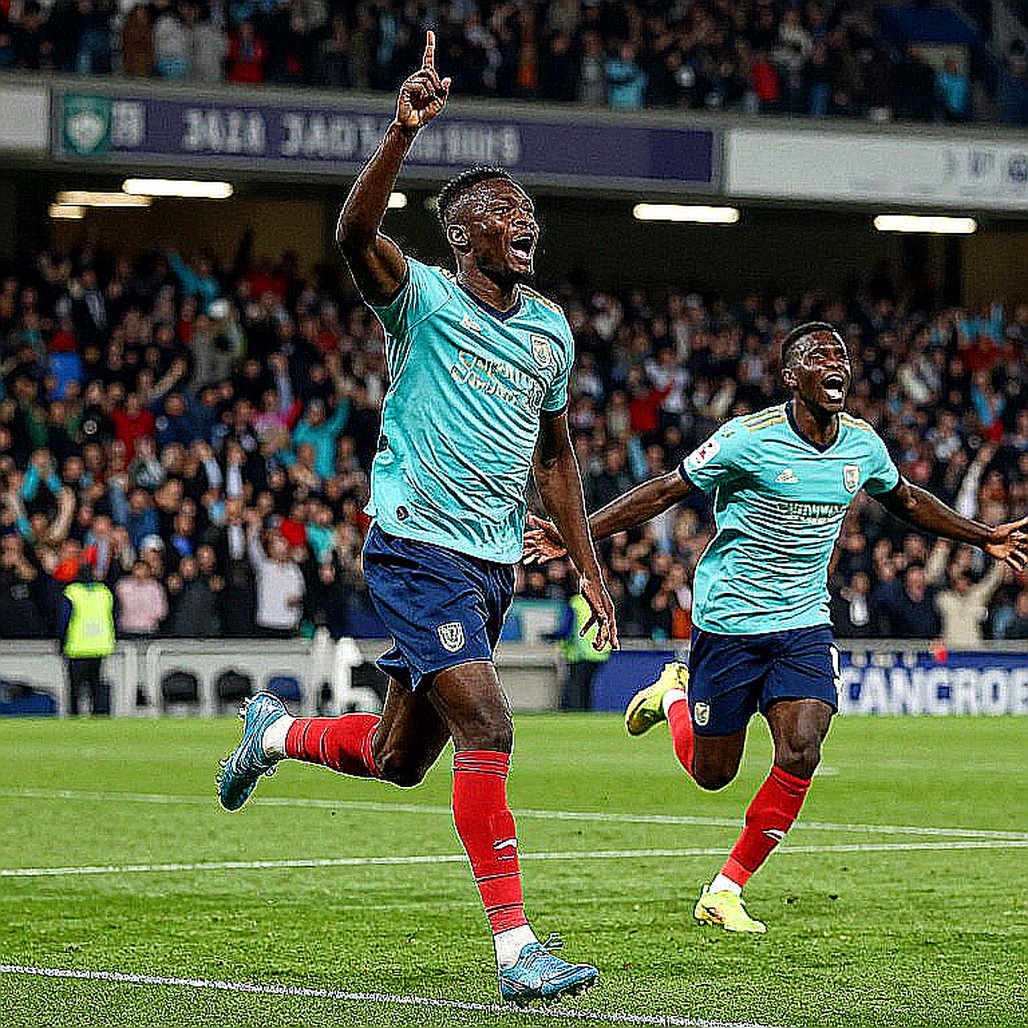
Nine months later, Vietnamese football answered differently. At the 2026 ASEAN Championship, the team under Kim Sang-sik was crowned champion, beating Thailand in a two-legged final 5-3 on aggregate. Nguyễn Xuân Son became a sensation with seven goals, won the tournament's best-player award, then suffered a serious injury in the second leg of the final in Bangkok. The hero of the tournament was a naturalised player.
And that is the point I want you to pause on for a second.
Vietnam won Southeast Asia with a naturalised striker, in the very year Vietnam had to stop before Indonesia, the region's most naturalised team. That irony says more than any official statement. It shows that Southeast Asian football has entered a new game, where national borders are more flexible, and where federations that know how to harness foreign resources can close the gap far faster than those that lock themselves inside the village pond.
But here is my contrarian view: the 2026 ASEAN Championship win may be lulling Vietnamese football to sleep. A regional title does not prove progress on the continental stage. Vietnam are still absent from the third round of 2026 World Cup qualifying, while Indonesia, their direct rival, are there. Look at Asian standards and the gap between Vietnam and Japan, South Korea or Iran remains vast, and a Southeast Asian title does not narrow it.
I could be wrong. And I am ready to admit it if I am.
But let me place a bet. I say that within three years, if Vietnamese football does not solve its youth-development and V.League quality problems, the national team will keep falling behind Indonesia on the continental stage, no matter how many Southeast Asian titles it wins. This is a prediction I dare readers to come back and check. If I am right, it goes on the record. If I am wrong, I will be the first to admit it.
Vietnamese football has been through a turbulent year: from the depths of Mỹ Đình to the summit of ASEAN. But the biggest question is not what happened, it is who will take responsibility for turning a moment into a foundation. In football, memory does not win the next match.

Cầu thủ liên quan
Bài đề xuất
Three Keepers, One Goal: Kim Sang-sik's Vietnamese Goalkeeping Dilemma2026-09-14
Nam Dinh 4-0 HAGL: When Traditional Play Collapses Under Relentless Pressure2026-09-06
The Bangkok Scar: When Vietnamese Football Won on a Single Pair of Legs2026-10-15
U20 Vietnam at a Historic Crossroads: The Narrow Window and the Price of a 4-Year Wait2026-09-04
V.League Transfers: When Trust Is Sold Before the Player2026-10-17
The Empty Analysis Report: When Vietnamese Football Says a Lot but Says Nothing2026-09-09
Bài đề xuất
FIFA ASEAN Cup 2026: Group B, Indonesia's Home Advantage and FIFA's Four-Year Gamble2026-09-13
The Thin Information Layer of Vietnamese Football: What Is Not Recorded Will Not Be Remembered2026-09-13
Vietnam and the Empty Number 12 Shirt: The Striker Problem Before the Thailand Test2026-09-30
Xuan Son injury opens door for Williams Minh Hoang: A generational test against Thailand2026-09-28
Van Hau Sent Off, Ngoc Tan Badly Injured: The Two Tactical Problems Left Behind by the Hanoi Derby2026-09-11
Vietnam reach ASIAD 2026 quarter-finals after 0-2 defeat: What coach Dinh Hong Vinh sees in 51 shots2026-09-23